7 November 2018: Mt Meron Field School to Meron (~ 11 km)

Today was our last walking day this trip, and we had a bit of a debate over how much ground to cover.  The problem is that once you enter the Nahal Amud valley (and you need to enter it by 1pm in the winter) you need to go through to the end or take a steep DCB1FD92-9474-4E1F-817D-9329553CBFCEclimb up to Ein Koves after about 5 km.  Eventually, we decided to keep the day short given the drive back – and it suited me in the end as I had a very early flight home and things to do in the house.

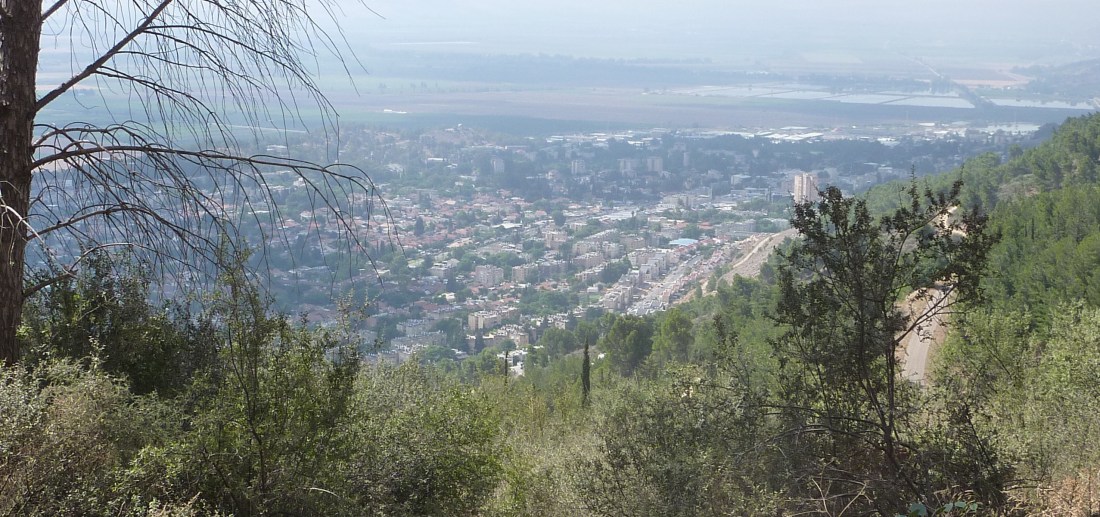
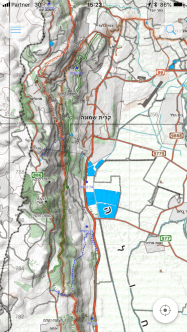
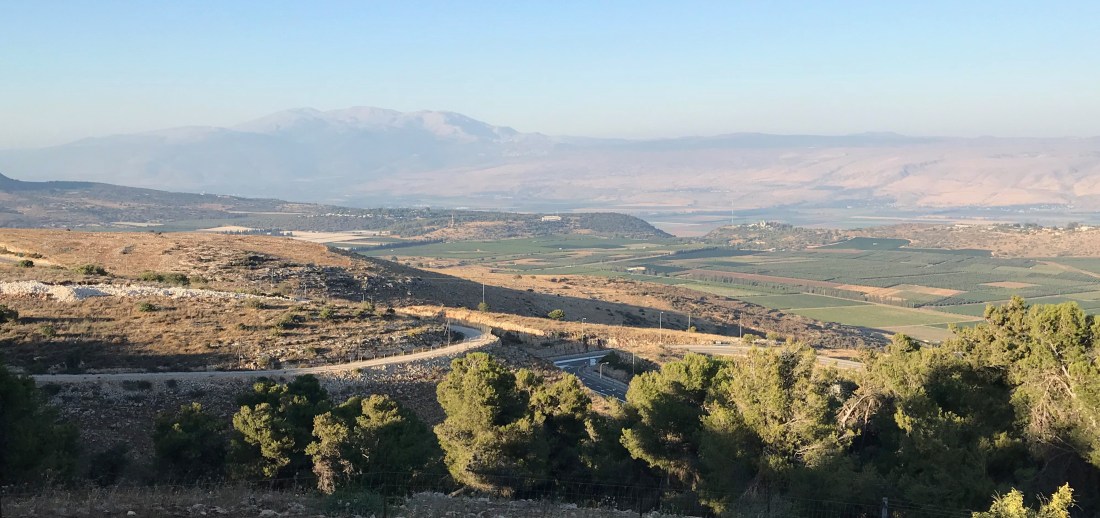
We started at Mt Meron Field School near the Ottoman ruins and continued the climb of the previous day up towards the peak of Mt Meron – at 1,204 metres the highest point in Israel and on the INT.  It was a steep climb through the Mount Neria Reserve with spectacular views as we got higher, both over Lebanon and the Hula valley towards the Golan shrouded in early morning mist.  There were a couple of view points for photographs but we resisted too many stops until we reached the Mt Neria view point.

IMG_7189After a short break, we then continued our climb for another kilometre or so to Mount Meron.  Mount Meron is accessible by road and towards the military radar and listening post at the peak we came across school kids and others bussed up to the picnic area near the top.

From there we started our descent down the Meron and Amud valleys which will ultimately take us to the Kinneret, some 215m below sea level.

IMG_7208

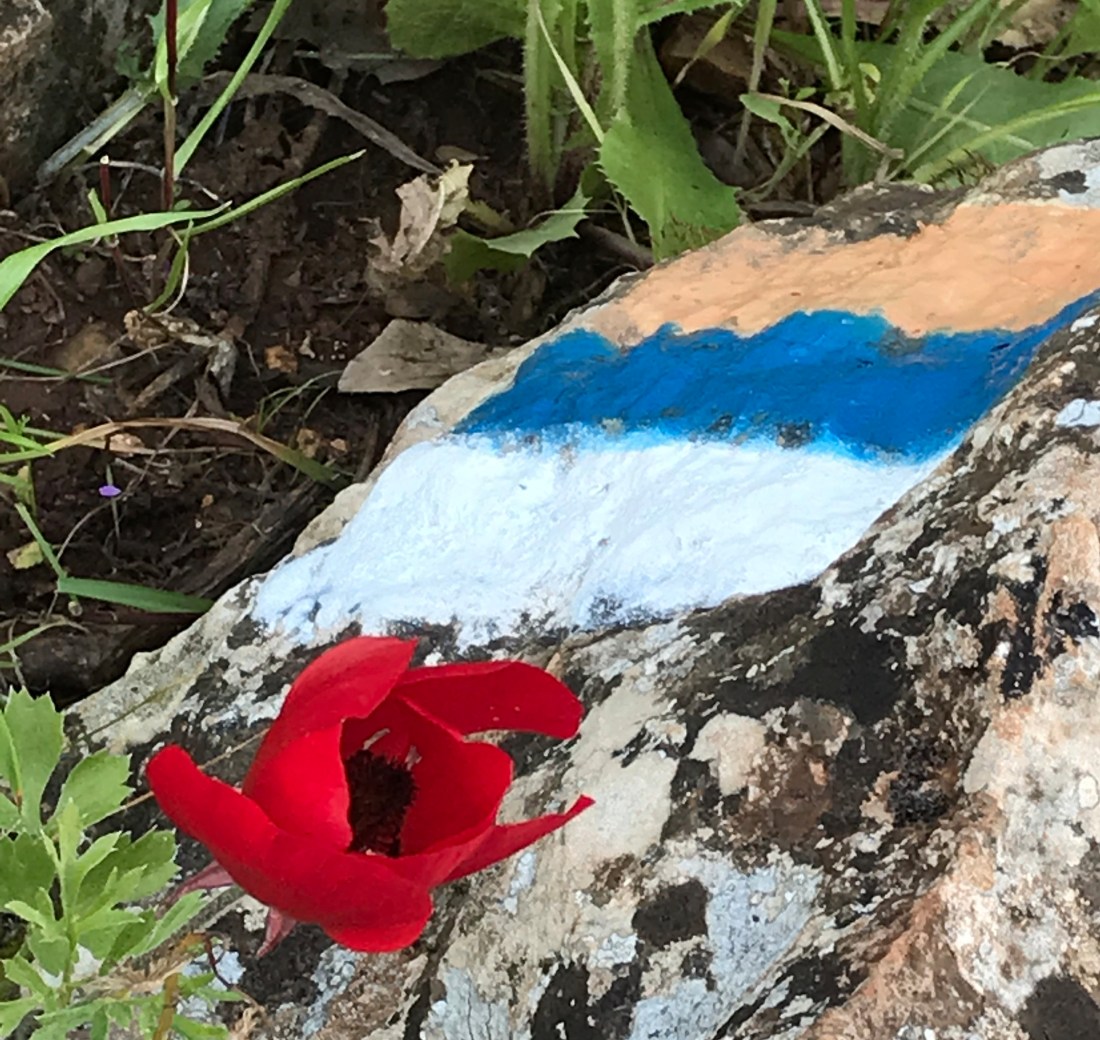
The descent was an easy one through light woodland .  The surprise was the range of beautiful flowers on the way (in November!), mainly crocuses but of various types including rare Saffron and a large patch of Sternbergia almost unique in Israel – or so we were told by an elderly lady enthusiast walking up the trail from another nearby parking lot.

IMG_7216We hurried through the crowds there and soon found ourselves lone again walking through open rock strewn hills towards more arable – if rough land.  We passed the large Druse town of Bayt Jan and a number of fields tended by Druse until we reached a memorial to a Druse Medic killed in 1992.  Being further from the border, we hadn’t seen a memorial on the trail for a while – although there were plenty in Safed – and it was again sad to remember a young life cut short.

IMG_7224

We started to get glimpses of Safed in the distance and the trail started to drop more steeply towards the Amud stream.  We were walking through limestone formations and Kastic caves up to 100m deep formed by water erosion started to appear.

So too did some rocks eroded by water in to shapes – like the one known as Elijah’s chairIMG_7229

We passed some more ancient wells and structures eventually reaching a synagogue associated with the great Mishnaic commentator Shammai – the contemporary of Hillel.  A structure there is said to be his tomb and we stopped for lunch before walking the remaining couple of kilometres to the car park on the bank of the Amud, below the town of Meron, where we had left my car.

A pleasant much shorter day – we finished by 1:30pm – and after collecting Rafi’s car we started to make arrangements for three walking sessions in 2019 and to make our separate ways home.P1080038

6 November 2018: Gesher Alma to Mt Meron (~18 km)

We set off in perfect walking weather from Alma Bridge, where we had stopped the previous day.  Our aim was a long hike IMG_7171up towards the source of the Dishon stream, starting in bright sunshine.

We followed 4×4 tracks for a good part of the day which made for relaxing walking, even though it was  steady uphill trek, flatish in parts and steeper later – particularly in the upper reaches of the stream (involving some rock scrambling),  and averaging about a 3% incline over the day.

Early on we passed the ruins of an old Ottoman mill P1080015nestling in the valley, which for sometime was probably 100 metres or more across.  The scenery was delightful, and as on the first day the trail during the morning was devoid of IMG_7170people.

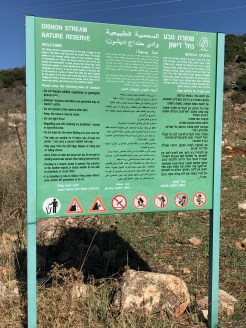
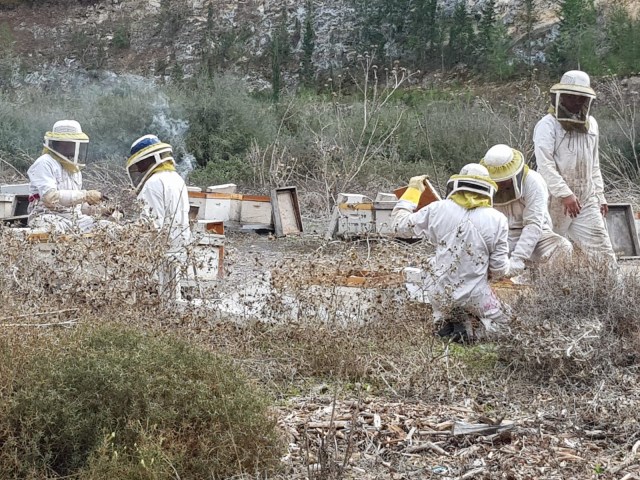
Once we crossed the 889 the trail was more wooded and it and the road followed the stream.  There was more human activity – we saw Thai beekeepers smoking beehives and collecting the honey, and the weather became a little more cloudy – but remained dry.

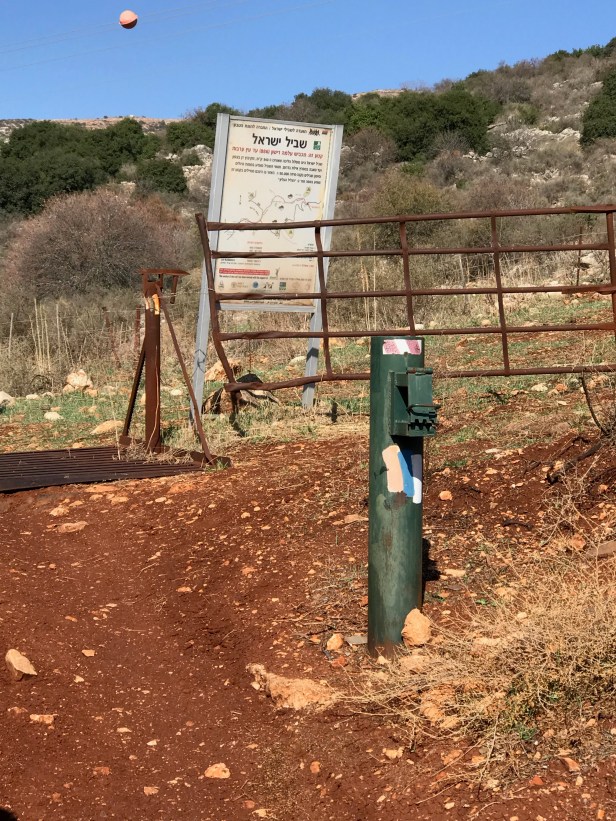
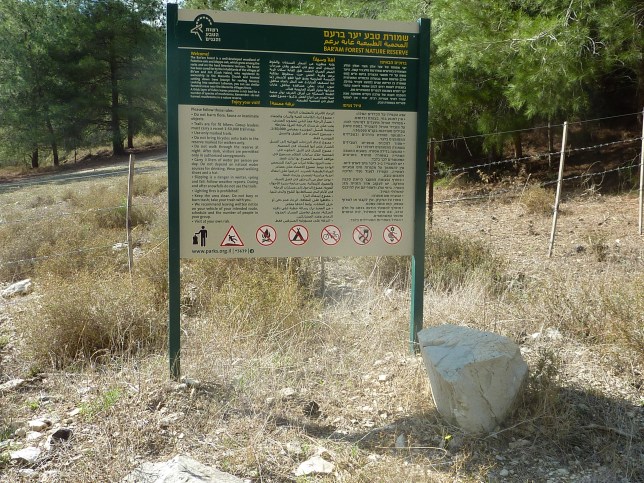
24f9a230-e8f5-4d21-9254-f060149a1b5aEntering the Ya’ar Baram Nature Reserve we came across groups of other walkers for P1080024just about the first time since we started the Shvil – day trippers walking down the Dishon from Mt Meron.  We found a nice spot for a relaxing lunch and set off against the P1080010tide of  occasional walkers who filtered through until we crossed the 89 and found ourselves alone again.  By now we were at over 750m but given the the trees and the valley we were in we did not see much in the way of views.

The last bit of the climb to the 89 was very different from what had gone before.  It was steep, rocky, damp and heavily wooded.  Indeed, the climb was almost oppressive.IMG_7176

We did though come across our first sign for ‘Trail Angels’.  Trail angels are good people along INT who open their hearts and their homes for hikers free of charge.  You get to stay at private homes, rooms in Kibbutzim, or sleep on
the back or front lawn in your sleeping bag.  In most places you can take a shower use the rest rooms, sometimes use the internet and occasionally cook your dinner inside the house.  In some places you can have breakfast for a low fee.  A remarkable institution we may take advantage of as we move to more remote area.

We arrived at the field school uneventfully in pretty good time (around 6 hours all in). P1080032 We were looking for the car park unsure whether to go right or left along the side road (it could only be 200m one way or the other)when a youngish lady in a car stopped and said (in Hebrew) – ‘you look old I’d better offer you a lift’.  This did not go down well with Ronnie in particular… indeed it took him quite a while to get over it.

Once back at the hotel I took the chance, before it was dark and the shops closed, to catch up with Tomer Camus at the Camus Gallery – an art gallery in the old Jewish quarter of Safed – along with his artist wife, Ketty.  We go back 17 years to when Jonathan was on year course, helping to teach and support Ethiopian immigrant children during the Second Intifada.  Jonathan struck up a relationship with Tomer when he bought two paintings  with a legacy from my dad at a time when Tomer was struggling with his new gallery.  Tomer’s family has been in Safed for 18 generations, moving there in 1492 after they were expelled from Cordoba, Spain and coming over to Israel by ship with Yosef Caro, later the author of the Shulchan Aruch and then a child.  We had coffee and a chat (he gave me a jigsaw puzzle on one of Ketty’s paintings for Jonathan’s children) and I promised to give him more notice of a visit next time.

Dinner that evening was in our hotel dining room, which was originally part of a Khan or small inn on the road from Acre to Damascus.  The dining room still had the stone rings to which animals were tied and the stone food and water troughs for camels and donkeys.  The views from there south east over the valley were beautiful.f351a29a-f3cd-46f6-a853-885f7cde344c


5 November 2018: On to Dishon…(~ 21km)

“Remember, remember the 5th of November” goes the rhyme about Guy Fawkes and his attempt to blow up the English Houses of Parliament – no need to today, of course, Brexit is doing it for us…

But in 2018 it is also the day we started on the next three stages of the INT.

I arrived in Israel only yesterday evening, but at 4.30am I was up to again meet Rafi at Ronnie’s Pardes Hannah home at 6:00am this morning.  By 7:30am we were at Rosh Pina for breakfast and planning the day.  We decided to stretch ourselves and complete the unfinished stretch to Yesha Fort as well as the Day 4 stretch to Dishon – over 20km in all.

We started a little before 9:00am (after our usual car dance, leaving a car at Alma bridge IMG_7148 (1)before driving North to where we last stopped in July) and reached Yesha Fort a little before 11.00am, walking as before with spectacular views over the Hula valley.  The morning weather was sunny but in the low 20s (or less) – perfect walking weather.

Yesha Fort, or the Nabi Yusha fort, renamed Metzudat Koach (Hebrew: מצודת כ”ח‎), is a police fort (one of the Taggart forts) built by the British Mandate administration during the 1936–39 Arab revolt in Palestine and currently used by the Israel Border Police.  The site around the fort contains a stone monument and a new museum (founded in 2014), together constituting P1070996the Metzudat Koach Memorial, which commemorates 28 Israeli soldiers who died during the 1948 conquest of the strategically important fort. The fort and observation point is located in the Upper Galilee, close to an abandoned Shia shrine of Nabi Yusha (“Prophet Joshua“).[4] The Hebrew word “ko’ach” (כח) has a double meaning: as a common noun it means “strength”, while its numerical value according to gematria is 28, the number of the fallen soldiers.

By 11.00am, after paying our respects to the 28 young men – almost all aged between 17 and 19 years old – who died seizing Yesha fort in the War of Independence, we were on our way to Dishon.  We passed Nabi YushaIMG_7163 and made good progress as the weather clouded over but the rain held off as we stopped for lunch at the top of Keren Naftali.  The views to our left over the Hula wetlands and Lake Agamon crowded with migrating birds remained magnificent.  We then walked down towards the Dishon valley under greying skies and  we started to get occasional threats of rain, and flurries of light showers by the time we were walking up the Dishon stream towards where we had left the car.  The afternoon was muted – the land was agricultural, mainly cows and the occasional vineyards – but the views of the Hula faded to our left and there was less of historic interest to see.

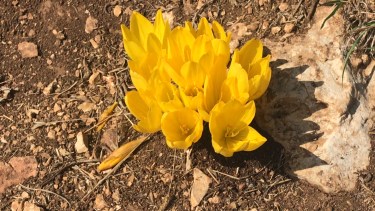
Perhaps most notable were the huge numbers of IMG_7154 (1)Irises starting to appear across the entire landscape, and the occasional autumn crocus that were scattered across the ground and often pocked up in the middle of the trail.  I look forward to seeing the irises in heir full glory in the spring!

We also came across two foxes – one shortly before the entering the Dishon valley and the other as we arrived at IMG_7152the car we had left at Gesher Alma, just below Dishon.  But, overall, the afternoon lacked interest compared to what had gone before, and it was raining by the time we reached the car.

Our spirits were though raised by the very pleasant hotel, a very hot bath and a great informal dinner a Ha’Ari 8.  The walk there and back through the old city, that Ronnie had not visited before, gave a taste of the special peace you find in Safed.

How far to go?

I suppose it is a question everyone asks; how far should I aim to go on the INT each day?  There are so many factors – what is the elevation to be lost and gained? how are the weather conditions (is it wet? or windy? or hot?), how rough is the terrain? what is the time of year and how much daylight is there? how much weight have I got to carry? and how fit am I?

I learned from the first three days how easy it is to over-estimate how much ground you can cover in a day in the heat of summer, especially if nursing an injury (and my achilles, although improving, is not yet healed).  It is also now abundantly clear that for most of its length the INT is far from a footpath, and at times the going can be tough.  Of course, the Red Guide gives a good idea of what a young fit hiker should aim to do each day, but that is about whole days and does not allow a lot of time to visit sites as you go along.  Other walkers’ ideas in Wikiloc and elsewhere help, and a friend who is aiming to walk the Camino de Santiago pilgrimage route this spring helpfully sent me a wonderfully ‘nerdy’ video on the best speed to walk, but most advice is from people who are not over the age of 65, and I think that on the INT 5km/hour is pretty optimistic – for me anyway.

Looking at the maps (in particular the contour lines!), I suspect around 20km is as much as we should sensibly take on for the first day of the next stage, conveniently taking us to the 886 where we can leave a car to get us to Safed for the night.  We have a few kilometres to make up from last time if we are to keep up with the Red Guide, and looking at the trail ahead I suspect that we will need to work hard over the three days we have set aside for walking.  I’m minded to try this for the first day.  Let’s see how it goes…

Onward to Mount Meron

Well it’s been three weeks since we finished our first three days walking.  A brief What’sApp exchange and everyone committed to continuing our tiyul and to the next leg from 5 to 7 November.

I’m not sure November is a perfect time of year (July wasn’t great either of course) and we would have preferred the third week in October when we could expect better, drier, weather, but it just didn’t work out for the three of us. The first week or so in November is usually a bit of a watershed weather-wise in the Galil, so we may get beautiful blue skies and pleasant walking – alternatively we could be hiking in a downpour.  We’ll just have to see. At least we’ve booked a decent hotel in Safed for the two nights, the Ruth Rimon hotel.  I love wandering the narrow alleyways of Safed, its ethereal atmosphere, the legacy of Kabbalah – and the fact that there are plenty of restaurants within easy walking distance.

Looking back, during the first three days we walked through what were the extreme northern limits of historic Israel, the territories allocated to the tribes of Dan and Naftali.  There is evidence and stories of Jewish occupation going back millennia, in the Golan, Tel Dan, and in Kedesh near Malkiya, where we stayed.  Yet, in more modern terms we were in fact on the French side of the old Sykes/Picot line – something I’d not realised before.

A little aside about this now I’ve done some research.

The Hula pan handle was to be part of French Lebanon, as far South as Safed.  So, in 1919, the British relinquished the northern section of Upper Galilee containing Tel Hai, Metulla, Hamrah, and Kfar Giladi to French jurisdiction.  The Yishuv was very unhappy with this, since it  left the sources of the Jordan River outside the borders of British Mandatory Palestine, where the state envisaged in the Balfour Declaration was to be established.  Therefore, the few isolated Jewish settlements in the Upper Galilee assumed great strategic value from the Yishuv’s point of view.  Nevertheless, there was a fierce debate, some Jewish leaders advocating the retention of Tel Hai and the other outposts at all costs, while others regarded their situation as untenable and advocating withdrawal from them.

Arabs in this area at the time were not primarily involved in activities against the early Jewish settlements, but rather in strongly opposing the imposition of the French Mandate of Syria, which they regarded as betrayal of the McMahon–Hussein Correspondence made during the Arab Revolt against Ottoman rule.  In a letter dated 24 October 1915, Sir Henry McMahon, then His Majesty’s High Commissioner in Egypt, promises the Sharif of Mecca, Husayn ibn Ali, to “recognize and support the independence of the Arabs within the territories proposed by him (Sharif of Mecca).”  These territories included the Arabian peninsula, Syria (which then included Lebanon, Palestine, and Transjordan), and Iraq as “purely Arab” areas and part of a future Arab state or states in the region – although McMahon was clear Palestine was not included.

The settlers in Tel Hai, headed by the Russian-born Jewish commander Joseph Trumpeldor wanted the area to be restored to British control which they hoped would eventually lead to its becoming part of a future Jewish state. However, as newcomers to the area recently arrived from Europe, they were suspected of being pro-French, which ultimately led to armed clashes.

In one notable exchange, on 1 March 1920, Shiite Arabs from Jabal Amil in southern Lebanon sought to search Tel Hai, however the Jews called for reinforcements from kibbutz Kfar Giladi. Joseph Trumpeldor and ten men attempted to drive the Shi’ites militias away.

At the end of a verbal dispute, an armed confrontation broke out, in which six of the Tel Hai Jews were killed and the remaining Jews retreated, whereupon the place was burned. The total number of killed was 13 (5 Muslims and 8 Jews).  Nevertheless the end result was that the Jews persuaded the British and the French to agree this area of Upper Galilee should be included in Mandatory Palestine.  It was thus possible for Tel Hai to be resettled in 1921, though it did not become a viable independent community and in 1926 it was absorbed into kibbutz Kfar Giladi.

Now though we move South of the original Sykes/Picot line for three more days of walking.

We need to settle the itinerary in more detail, but broadly on our first day we aim to finish the stretch to Yesha Fort, and then to move on as far as Dishon, if we can.  On the second day we hope to do Nahal Tsivon; and our final leg will be up Mount Meron, which will not be fun if the weather is bad.  The autumn though will be much cooler and a better time to walk than the July heat of last time, and although we will still miss the spring flowers hopefully we can arrange a walking session next spring to see them then.

Overall, I’m really looking forward to resuming the INT.  My ankle is easier, and the tendon, although occasionally sore, less swollen and recovers faster from stress, so I’m optimistic it will be much improved by the time we walk.

Bring it on!

20 July 2018:  Tel Hai to close to Yiftah (~14km)

Breakfast was ready early for us today – as yesterday a friendly informal affair with two young girls (Kibbutzniks?) ensuring we had a sustaining start for the day.  We were again alone in the dining room, and Ronnie helped us to hard-boiled eggs and olives for the day.

I can see this is going to be a tradition.

There were initial hints the day might not be quite as hot as the previous two – there was scattered cloud cover – but the heat was as fierce as ever in the sun.

It being Friday we wanted to be back home for Shabbat, so we decided to shorten the trek, to stop 6 or 7 km short of Yesha Fort, and to make up the distance next time.  That meant dropping the car at a remote point on the trail where it coincided with a short stretch of secondary road.  It was close to an army base and we made sure we parked far enough away not to have it blown up.  The Peugeot was still playing up, with a light show of warning lights every so often, but as the previous day we ignored it.

Onward then North to Tel Hai to restart the trek.  The further we drove, and the steeper the sharp downward curves we went through, the more worrying the return trip loomed.  I was, frankly, a bit nervous – it looked like being a long hot day.  We were carrying extra water and so weight, my ankle was aching and the blister on my other IMG_6210foot hurt.  At least the blister evened out the limp.  Problem was my memory continued to fail – and now it wasn’t even a different thing I was forgetting each day – it was back to forgetting the walking pole.

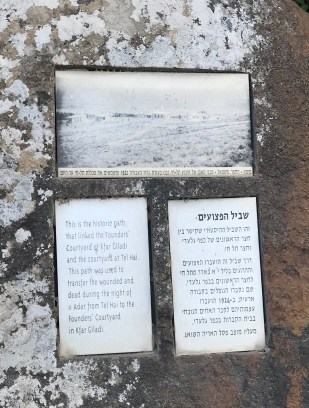
The first 2km or so didn’t help; a steep descent along the path the wounded had been
evacuated from Tel Hai 100 years earlier, followed by a much steeper ascent – at least in shade. But, after that, the walking was beautiful; mainly dirt road or broad forest tracks with dappled shade and increasingly stunning views to make up for the fact we were climbing steadily, and at times steeply.

We moved out of the territory of the tribe of Dan into that of Naftali; the steep cliffs we were traversing and steadily climbing led up to the Lebanese border and the Lebanese villages we could see close by to our right and behind us.   Eventually Lebanon was hidden by steep cliffs and we walked in a land devoid of people – no farms, no villages, just the occasional signs of human impact in the forest – mountain bike runs, other trekking paths, abandoned iron mines, an occasional cattle grid and one cow (odd – no fields or grass), light woodland, and always on our left a steep drop and stunning views of the Hula valley.

Compared to days one and two, the peace was different – quiet forest and muffled sounds rather than more open country.  We came across three teenagers also hiking to Yesha, and then a summer camp activity centre in the forest close by the cable car from the valley to Manara with kids mountain biking, climbing, practising archery, and some just playing draughts and chilling out. We were using a lot of water and it was good to be able to replenish our supplies at the summer camp.

By this point the constant climbing was really impacting my tendon and with Ronnie’s help I found a suitable broken branch to use as a walking stick.  This worked well, and soon after we were on a long steady part broken tarmac part dirt road up to Mishkenot Haro’im.  The road was exposed to the sun, now high in the sky, and the heat started to become intense, but the views over the Hula to the Golan were magnificent and we made good time, finally moving off the road to a footpath in rocky but green and attractive countryside before reaching the car just before Yiftah, a somewhat truncated day to allow plenty of time to get home for Shabbat.

We drove back to pick up Rafi’s car and headed off home – in convoy in case my Peugeot misbehaved – via (how Israeli of course) a place Rafi knows that he assured us makes the best humous in Israel.

Overall a great three days.P1070970

What was good?  The scenery was spectacular, the long quiet periods of walking away from people – the INT here is off the beaten track (except when at the entrance to some of the Nature Reserves), the friendliness you so often find in the countryside where the pace of life is slower and people have time for each other, the opportunity to let your mind drift into inner reflection, and the pleasure of just travelling a beautiful country under your own steam at your (or Rafi and Ronnie’s) pace. Everywhere were little museums, archaeological ruins, sites of interest, potential detours – we could only taste a few or we would never have finished.

Most of all the feeling I have always had that Israel is our land, the true Jewish home, just grows as this amazing spider web of interlocking events and histories over millennia, of ancient sites and views, of historic names and of people coming back home from across the world, continues to grow and enmesh you.

What is not so good?  For nearly all the first three days we were walking within three miles of the Lebanese border.  Lebanese villages were at times just a few hundred metres away – quiet and peaceful in the sun.  But Hezbollah positions are clearly there too, just as close, and many of the Israeli kibbutzim, moshavim and towns seem extremely exposed and vulnerable.

The evidence of the history of violence and the terrors of the past are always close by. Whether it be biblical towns crushed by invaders, mediaeval fortresses or more modern historic encounters and losses.  Events such as at Tel Hai a hundred years ago; the memorial to the 73 special forces soldiers who died in the 1997 helicopter crash; the poignant photographs left by relatives at the memorial to the 12 paratroopers killed – again at Tel Hai – in 2006 in the Second Lebanese War (how could they have been allowed to gather at a point so plainly exposed to Hezbollah observers and Katyushas?); or the many individual memorials.  All along the way at beautiful viewpoints over the Hula and Golan there is tragic evidence of historic enmity and of young men who more recently gave their lives, and of their families torn apart, to protect this narrow finger of land between two enemies looking down in hatred and anger.

19 July 2018: Kibbutz Dan to Tel Hai (~22km)

The problems we have had in starting our trek early continue.  Breakfast was a typical and excellent Israeli kibbutz affair – cream cheeses, grilled vegetables, humous, olives, eggs (boiled and omelettes) and all the rest – but it wasn’t until 7:30am.  We were the only guests there even at that time and we were pretty tired after our very early start the day before.  So we weren’t on our way from Malkiya until after 8:00am.

We left Rafi’s Forester at the Tel Hai cemetery where Yosef Trumpeldor is buried, and made our way to Kibbutz Dan to start our trek at the arch that formally marks the Northern beginning/end of the INT. There is a Museum at the entrance to Beit Ussiskin next to the start, but we decided to leave visiting that until our return in the afternoon to avoid the heat.
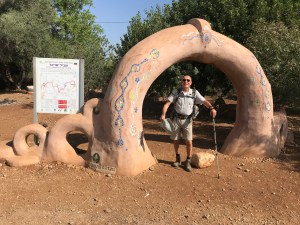
The walk through the morning was simply beautiful.  After just a short distance we reached Tel Dan, a city mentioned in the Bible and described as the northernmost city of kingdom of Israel and belonging to the tribe of Dan.  We decided to do no more than take a couple of photographs, planning to revisit the site properly on another occasion.  The trail then progressed around the edge of the Tel Dan Nature Reserve with a small tributary of the Dan river crossing our path and Lebanon just a few hundred metres away to our right.  We could see Lebanese villages and military listening posts on three sides and Rafi continued to display his
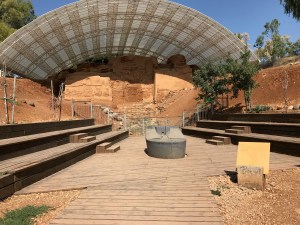
detailed knowledge of the area.  A few kilometres in the distance we could see Kfar Giladi, although it seemed to be on wheels as it apparently moved away as the trail weaved towards it.

It was all pretty rural. Lots of cattle grids, though few cows, birds, clusters of beehives and a well-marked, flat and easy trail until we reached the Snir nature reserve.
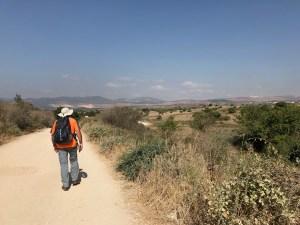
The Snir is the third of the three sources of the Jordan, with the Banias and the Dan, and Ronnie and I got in free with our Israel Nature cards –  even though Ronnie’s had expired.  But we had not realised that at this point the INT went down the middle of the Snir river, and that meant us each paying a pretty high price for rubber beach shoes at the small shop run by a photographer from Tel Aviv.

The early part of the trail in the reserve was crowded and full of Israeli schoolkids from local summer camps, but as we walked further down the river bed of the Snir the crowds disappeared again and, as before, we felt like the only people on the INT (which, admittedly, in July is not that surprising).
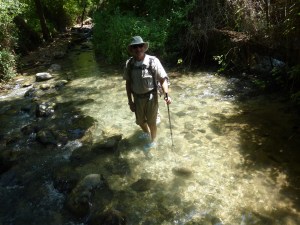
The trail through the Snir was rough and uneven, sometimes we were clambering over rocks and sometimes wading up to our knees – but the water was delightfully cool, and there was plenty of shade from the trees growing along the banks of the river. Where the INT finally left the river we ate the eggs we had taken at breakfast whilst sitting in the shade and then moved on.

At the entrance to Kibbutz Ma’ayan Baruch we found two unspent ammunition rounds and left them at the deserted entrance gate.  The INT guidebook told us there is a world-class Natural History museum there but it was getting late and again over 40C and so we decided to press on.  Although we were taking time out to see a lot of things along way, there is simply so much to see along the INT that it would take months to walk if you stopped to visit each of the sites.

It remained pretty easy walking, but for the oppressive heat that came up from the tarmac once we hit a paved road, and there was though a final climb up to Kfar Giladi.  We arrived at the adjacent Tel Hai cemetery just as the heat of the day peaked, without the long hot afternoon hike of the day before having covered over 22km.

Kibbutz Kfar Giladi was founded in 1916 by members of Hashomer on land owned by the Jewish Colonization Association.  The area was subject to intermittent border adjustments between the British and the French, and in 1919, the British relinquished the northern section of the Upper Galilee containing Tel HaiMetula, Hamra, and Kfar Giladi to French jurisdiction.

After the Arab attack on Tel Hai in 1920, it was temporarily abandoned. Ten months later, the settlers returned.  Between 1916 and 1932, the population totalled 40–70. In 1932, the kibbutz absorbed 100 newcomers, mainly young immigrants.  Yet, from 1922 to 1948, between 8,000 and 10,000 Jewish immigrants from Syria, Lebanon, Turkey, Iraq, Afghanistan and Eastern Europe were smuggled into Palestine through Kibbutz Giladi, circumventing the British Mandatory ban on Jewish immigration.  In an operation known as Mivtzah HaElef, 1,300 Jewish children were smuggled out of Syria between 1945 and 1948.  At the kibbutz, the children were dressed in work clothes and hidden in the kibbutz chicken coops and cowsheds.

Tel Hai cemetery, where we had left the Peugeot and finished the trail that day, evoked mixed emotions in me.  The story of Yosef Trumpeldor and his roaring lion is inspiring and far enough away in time not to be too personal.  In contrast, the memorials to the twelve reservists who died in its shadow when hit by a Katyusha rocket in the 2006 Lebanon war is too recent; the evidence of family loss – fading flowers and photographs – tragic and extremely moving.  We noticed the 12th anniversary of their deaths – their Yahzeit – was the following week

Getting back to Malkiya was pretty easy as the other car in Kibbutz Dan was just a very short drive back.  However, our intention to visit the Beit Ussisikin Museum foundered on a petty bureaucratic approach to our attempt to buy senior tickets, and so we made our way back early instead for a swim.

The Kibbutz had a a great little supermarket, and the ladies running it were extremely friendly, offering me bunches of sweet wine grapes, after which I joined Rafi and Ronnie by the pool.  As Ronnie observed, there, as with all public swimming pools in Israel, loud pop music seems to be compulsory.

That evening we headed to Dubrovin’s Farm, one of the first farms in the Hula valley, for dinner.  It was established by Andrei Dubrovin (1863–1967) who moved to Ottoman Palestine with his family in 1903 from Astrakhan.  He and his family were Subbotniks, Russian Christians who kept seventh-day Sabbath.  After their conversion to Judaism they took Hebrew names. Andrei became “Yoav”, and his wife became “Rachel”. The family farm, of 650 dunams, was located near a malaria-ridden swamp and two of Dubrovin’s sons and two grandchildren died of the illness. He eventually moved most of his family to Rosh Pinna, leaving behind his eldest son, Yitzhak, to manage the buildings, fruit orchards, and gardens.

Yitzhak bequeathed the Dubrovin Estate to the Jewish National Fund and the farm was converted into a museum that commemorates the early pioneers.  Yet, in the grounds of the museum, are the ruins of a synagogue dating between the 4th and 6th centuries, highlighting the historic Jewish settlement in the region.   The place is wonderfully atmospheric with an air of history, and the kosher restaurant, run by a young family, is excellent.

18 July 2018: Neve Nimrod to Kibbutz Dan (~15km)

18 July 2018: Neve Nimrod to Kibbutz Dan (~15km)Well, today, after a lot of anticipation (and with some trepidation on my part) we started the Israel National Trail.

Getting to the start was not entirely straightforward.  Conscious of the likely heat (it was to reach 42C!) we wanted to start early, and that meant a 4:15am start for me to drive to Ronnie’s home in Pardes Hanna where I met him and Rafi.  A quick coffee, and then we drove two cars up to the Galil, grabbing another coffee, and a croissant, just before Kiryat Shemona.

Strictly, the trek we planned for our first day is not part of the INT, which starts at Kibbutz Dan.  However, the superb Guide book ‘Hike the Land of Israel:  The Israel National Trail’ by Saar and Henkin (essentially the INT bible), recommends starting in the Golan with a one-day hike from Neve Nimrod.  So, that was our plan.

We started the day with a bit of a car dance. We left my Peugeot in Kibbutz Dan (at the official start to the INT) and then drove on in Rafi’s Forester to Neve Nimrod to start the walk.

Even then there was a false start as after about ten minutes I realised I’d left a water bottle in Rafi’s car and needed to go back for it.  That wasn’t my only memory lapse – I also left my walking pole (brought to help with an inflamed Achilles tendon in my left ankle) in the car; but by the time I had remembered that it was too late to go back.  A sign of age… although apparently it’s OK if you forget a different thing each day, just so long as you don’t forget the same thing every day…

So, although we had hoped to be on the trail by around 8:00am, it was three quarters of an hour later that we finally set out on a very pleasant downhill stroll to Ein Kiniya, a pleasant and apparently affluent Druse  village of just under 2,000 people.  It is one of the four Druze-Syrian communities on the Israeli Golan Heights, together with Majdal Sams, Majdal and Buq’ata.  On the way, Rafi pointed out a number of sites and villages we could see on the way, as the entire northern Galilee and part of Lebanon spread out before us.
There was a delightful peace about Ein Kiniya.  Druse flags and also a variety of national flags – Portuguese, French, and others – flew from different houses, reflecting we guessed different World Cup loyalties.  The village was quiet and peaceful, and an elderly farmer in the main street offered us peaches from his tractor trailer.  It was the first example of what we came quickly to discover. The entire INT experience may be drawn by the trail, but it is coloured in and brought to life by encounters and experiences along the way, with people and with history.

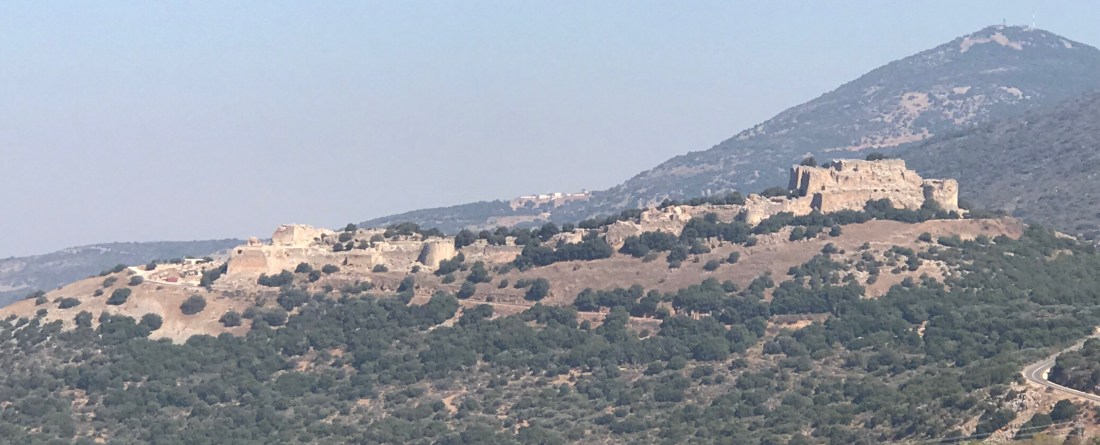
From the village we walked uphill along a good road to Nimrod Castle, a massive fortress built around 1229 by Al-Aziz Uthman, the younger son of Saladin, to pre-empt an attack on Damascus by the armies of the Sixth Crusade
In 1260 the Mongols captured the castle, dismantled some of its defenses and left their ally, the son of Al-Aziz ‘Uthman, in charge of it and the nearby town of Banias.  After the subsequent Mamluk victory over the Mongols at the Battle of Ain Jalut, Sulthan Baibars strengthened the castle and added larger towers.  At the end of the 13th century, following the Muslim conquest of the port city of Acre (Akko) and the end of Crusader rule in the Holy Land, the fortress lost its strategic value and fell into disrepair.  It was badly damaged by an earthquake in the 18thCentury.

We spent around 45 minutes touring the Castle – particularly struck by the stupendous views, the apparent impregnability of the site and the quality of the construction.  The water cisterns were still full – albeit the stagnant water is now mainly a home for endangered salamanders…

P1070990We probably stayed too long at Nimrod.  Higher up there had been a freshness to the air and a very pleasant breeze.  Now it was getting hotter, the wind was dying and, as we descended the steep and rock-strewn trail from Nimrod, the temperature rose rapidly and the walk became much more strenuous.

It took around an hour and a half to reach Banias at the foot of the mountain and it was a real pleasure to find the refreshment hut in the National Park.  Coming in from the INT we found we had avoided the payment booths – unlike at Nimrod where Rafi had to pay (although Ronnie and I had free entry because of our annual Israel Nature Parks passes).

I hadn’t been to Banias for nearly 50 years and had forgotten how interesting it is.  There is the spring, a source of the Jordan, and beautiful ponds, falls and trails. There are also the remains of a temple built by Herod the Great, of his son Philippi’s capital (Caesarea Philipi) and of a Crusader city.
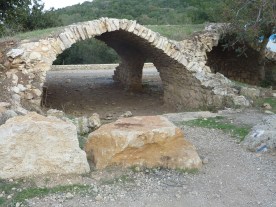
But, it was now both past midday and seriously hot and so we pressed on, following the stream.  We passed under  a beautiful Roman bridge, and then the only surviving workable water-powered flour mill in Israel – the Matroof mill – and the Officer’s Pool used by Syrian officers before 1967.

In all we walked around 3.5km through a beautiful and verdant canyon (with a suspended path over some striking rapids) before branching off towards Kibbutz Dan.  It was uneventful until around 0.5 km from the car when I got extreme cramp (I don’t think I’d eaten enough) which didn’t really let off until we arrived, around an hour or two hour later than we had originally hoped, at the Beit Ussiskin car park at the real start of the INT where we’d left the Peugeot.  It was seriously hot but we had covered a decent distance and lost over a kilometre in height: here is what we did.

We now though had to drive back to Neve Nimrod to collect Rafi’s car, and then drive south again past Dan for around 30 minutes to reach our accommodation for two nights at Malkiya, a kibbutz around 25 minutes south high up close to the Lebanese border.  By then I was getting an interesting but intermittent display of warning lights on the Peugeot dashboard.

Malkiya is a friendly and delightful place, with green lawns and simple but large clean chalet rooms with an en suite shower and a kitchenette.

We were pretty tired and our plans for a quiet afternoon reading by the pool had not worked out.  Basically, we just crashed out, showered and went for an early dinner.

On our way we visited the memorial at Malkiya and chatted to a lady who had been at the kibbutz for 60 years who was having a video made for her birthday.  The views are spectacular over the entire Hula valley and the Golan Heights, and the history of the place so typical for the kibbutzim in the area.

The kibbutz was established in March 1949 by six former Palmach soldiers who had been demobilised at the end of the War of Independence.  It is named after the depopulated Arab village of al-Malkiyya, which in turn had retained the name of the Jewish biblical village of Malkiya – a priestly family from biblical times (Nehemiah 10:4) – on whose lands it was established.  The important Canaanite and biblical city of Kedesh lies just below it.

The memorial photographed here says more about its foundation.

After dinner we sat outside and drank a glass of wine each – made from grapes grown by the kibbutz and given us when we checked in.  It was a beautiful still night.  It was hard to believe we were just a couple of hundred metres from Lebanon.  During the evening we heard gunfire.  Training?  A celebration in the nearby Lebanese villages?  Skirmishes in the Golan?  We didn’t know.  It was surreal.

The Journey Begins

img_9656-1.jpgWell, I’m Anthony Angel (Tony to many friends and in business), it’s Thursday 12 July 2018 and I’m on the plane to Israel contemplating the start of the Israel National Trail (INT) on Wednesday next week.

Of course, it’s not the first time I’ve thought about it.  I’ve been planning it for months and the idea has swirled around my head for years, although in the rather inchoate way that normally goes nowhere.

So, what has turned the idea into reality on this occasion, rather than it staying something I promise myself I’ll do one day and never get around to?  Like my dream of sailing the Mediterranean from West to East (Vale do Lobo to Herzliya) purely island hopping.  I’m not entirely sure, and maybe the sailing will happen one day (I only mention it here to put pressure on myself to do it), but as I’ve not yet started the INT, let alone finished it, I’m definitely getting ahead of myself. 

One reason is I need a challenge.  Without one I’m inclined to vegetate,  and having cycled from North to South in Israel – Metulla to Eilat – twice now I don’t want to cycle it again.  Especially as seeing the country that way, though fun, doesn’t give you the time to live and feel it.

Another is that I’m following in the footsteps (literally!) of friends of ours – Josyane and Lawrence Gold and Lucy and Michael Daniels – who started in 2014 and have so far reached Arad.  Quite an achievement both physically and in having the determination to stick to the task.  Lawrence, in particular, in his conversations with me has managed to produce just the right blend of envy and inadequacy to get me going.

But I think the primary reason is this.  We are fortunate enough to have a home in Israel, have visited many, many times, and I love exploring and learning more about our history.  I believe, and want to discover whether, a greater depth and understanding of my love of Israel, good and bad, will come from the experience of walking the whole land.  And perhaps also of myself.

At this point I should explain what the INT is.

The Israel National Trail(Hebrew: שביל ישראל‎, Shvil Yisrael) is a hiking trail that criss-crosses Israel from North to South, traversing a wide range of landscapes, a rich variety of flora and fauna, and a diversity of cultures.

The trail stretches from Kibbutz Dan, near the Lebanese border, to Eilat on the Gulf of Aqaba, and was named by National Geographic as one of the 20 best “epic hiking trails” in the world. The INT is approximately 1100 km (683 miles) long. The exact length changes periodically as the Israel Trails Committee makes minor changes to the routing in various locations.

I am not walking it alone or in one go but with Ronnie Green, friend and sailing partner, and his old IDF friend Rafi Yossipovitch, and in sections over a period of years as time and circumstances permit.  But I’m hoping that in some ways a slower pace will allow me to savour and deepen the experience, and ensure that I truly take the time to absorb it rather than just treat is as something to be done.

Let’s see how it works out…