24 October 2019: Meshad to Alon HaGalil (~14 km)

Today almost felt like a day off!  A short stage, that also allowed Rafi to get back early to his wife D’vorit who is still recovering from a nasty fall where her head struck a rock.  

We dithered a little about where to finish the day and drove around unnecessarily for 40 mins looking for somewhwere closer to our start before leaving Rafi’s car by the Iftachet junction of Routes 77 and 79 – precisely what we had planned to do at the outset!

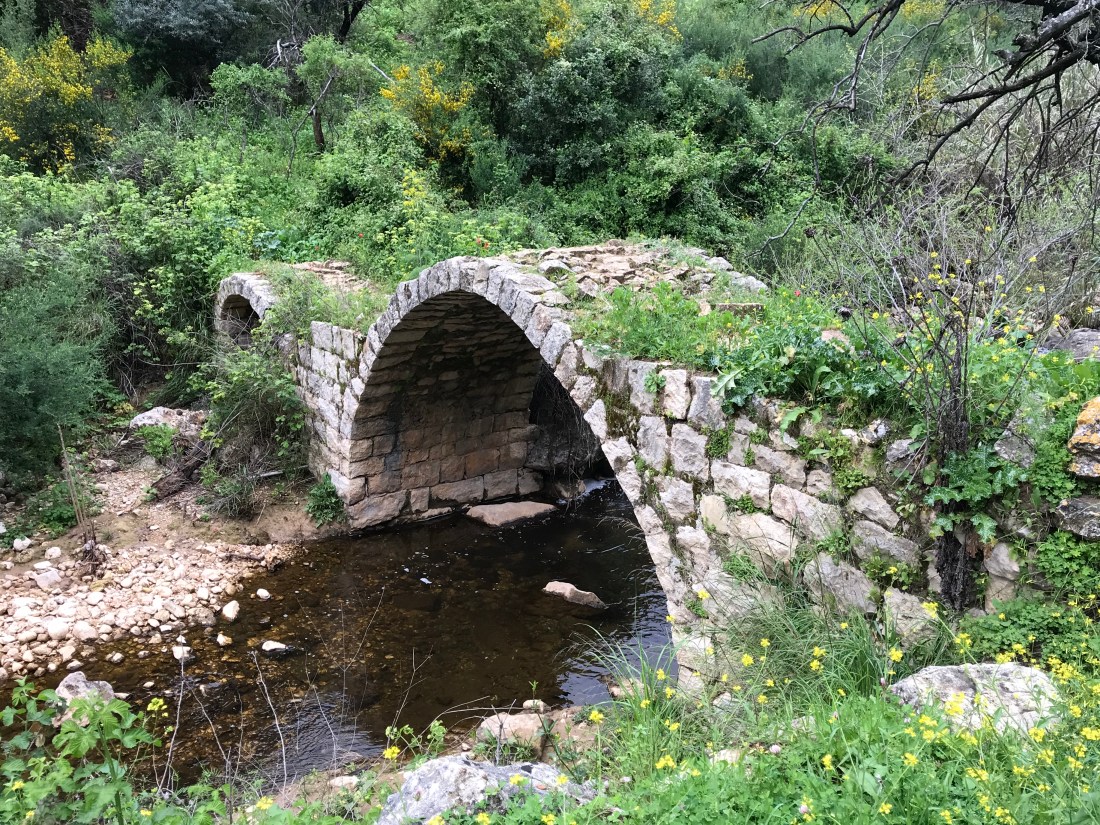
UNADJUSTEDNONRAW_thumb_1256We started with a steep climb to the centre of the arab village of Meshad, where there is a beautiful new mosque, and then walked steadily downhill towards Zippori. After about 2.5km we left the tarmac.  The trail was broad and clear through shaded pines – but painful on the feet as it was uneven and covered in sharp rocks.  We passed a group of around ten 70+ year old army veteran hiking the trail from the south in memory of a Brigadier colleague who had died, but otherwise again we had the peaceful trail to ourselves, part from pairs F16s occasionally roaring across the skies.UNADJUSTEDNONRAW_thumb_1270

We soon arrived at Zippori but did not have the time to see it as we were conscious of the need to finish early, and it needs time to appreciate.

Zippori is a village and archeological site 6 kilometers north-northwest of Nazareth.  It lies 286 meters above sea level and overlooks the Beit Netofa Valley.  The site has a rich and diverse historical and architectural legacy that includes Hellenistic, Jewish, Roman, Byzantine, Islamic, Crusader, Arabic and Ottoman influences.  Josephus Flavius described it as “the ornament of the Galilee”.

The main attractions today include a restored third century villa with a magnificent mosaic of scenes from the life of Dionysus, the god of wine, and the beautiful “Mona Lisa of the Galilee”.  There is also a synagogue with the magnificent “Nile Mosaic” dating fron the 5th century CE, a partially restored 4,500 seat Roman theatre and an ancient water system.  the Crusaders believed that Ann and Joachim, the parents of Jesus, lived in Zippori where today a 5th-century basilica is excavated at the site honoring the birth of Mary.  There are in fact two early Christian churches, a Crusader fort renovated by Zahir al-Umar in the 18th century, and over sixty different mosaics dating from the third to the sixth century CE.

“Mona Lisa of the Galilee”, 4th-century Roman mosaic in Zippori

Following the Bar Kokhba revolt of 132–135CE, Zippori was one of the Galilean centres in Galilee where rabbinical families from Judea relocated.  The remains of the synagogue were discovered on the northern side of town.  In the 7th century, the town was conquered by the Arab Rashidun armies during the Muslim conquest of the Levant.  Successive Arab and imperial authorities ruled the area until the Crusades.

Until its depopulation during the 1948 Arab–Israeli War, ‘Saffuriya’ (as Zippori was called) was an Arab village.  Moshav Tzippori was established adjacent to the site in 1949. It falls under the jurisdiction of Jezreel Valley Regional Council, and in 2018 had a population of 970.  The area occupied by the former Arab village was designated a national park in 1992.

This is a definite place to return to…

I was then astonsished to find just a kilometre further on the tomb of Rabbi YehudaHaNasi who completed the editing of the Mishnah, finalising it into its current form.

There are two opinions regarding the burial location of Rabbi Yehudah HaNasi, either in Zippori or in Bet Shearim, UNADJUSTEDNONRAW_thumb_1274sourced in conflicting passages of the Talmud.  It is probable that a tomb was original created for Rebbe in Bet Shearim but since he passed away on a Friday (on 15 Kislev – his Yahrzeit is my hebrew birthday), he may instead buried in Zippori, where he was located at the time.

An alternative view (we are talking about Mishnaic times…) is that he was buried in Bet Shearim, and this is the tomb of his grandson.

The tomb was small, restrained and had an impressive stillness.  It was extraordinary to think, as I prayed there, that this may be the tomb of the man who, born on the date of Rabbi Akiva’s passing and following the Kar Kochba revolt, essentially secured the future of Judaism at a very dark time.

UNADJUSTEDNONRAW_thumb_1272


We walked on into Resh Lakish Park, for a while accompanied by a young Israeli girl fresh out of the army and hiking the trail on her own – a welcome reminder that in many ways Israel is still an extremely safe country.  We parted as we reached our car just 4 hours after starting (against the 6 hours allowed in Rafi’s guide).

UNADJUSTEDNONRAW_thumb_1261A relaxed day to finish this 3 day stint: we look forward to our next one in December.


23 October 2019: Yardenit to Kfar Kish (~25km)

So, this was the leg over pretty empty terrain, with no towns or villages along the way that we postponed, because we were concerned that unless we started early we would not manage it in one day.

As a result we did the next leg – Kfar Kish to Nazareth Illit the previous day – because it was supposed to be a bit easier.  As you will have read, if it was, today was going to be brutal!

We left the hotel at 06:00 well laden with water and dropped the car just a couple of kilometers down the road at Kfar Kish before heading to Yardenit – buying provisions for lunch along the way.  The hotel had provided an excellent – and over-generous – packed breakfast and after eating that at Yardent we were on the trail by 7:30.  Our packs felt heavy but lightened up along the way.

We started well below sea level (the Kinneret is at an elevation of -200m) and after following the River Jordan for a couple of kilometres, the banks dotted with overnight campers and the river with early bathers, passed the early 20th Century kibbutzim of Degania and Degania Bet.  We then started a long steady 8 km climb up to the Eilot observation point at around 350m elevation.

UNADJUSTEDNONRAW_thumb_1267

The views from the Eilot observation point, and later from further on, across the Hula Valley to the Golan, north beyond Safed to Lebanon, east across the heavily cultivated Jordan river banks to Jordan and west across the villages and towns, Jewish and Arab, of the Galil, were simply stunning.

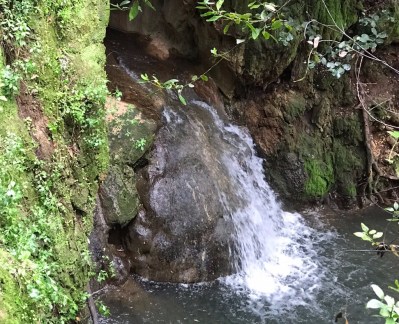
For the most part the track was pretty good – although in places there were (currently, at the end of summer) dry waterfalls to rock climb around of greater or lesser difficulty.  Compared to the previous day, it was a doddle.  Indeed, over the entire day we only climbed around 600m at most, compared to 1,200m or more on the Mt Tavos/Devora/Yona leg.

UNADJUSTEDNONRAW_thumb_124f

The route was very rural – cows grazing, apparently untended, olive groves, areas of fields with already harvested crops, dry yellow stubble. We rarely passed other people let alone ‘Shvilists’ but from Eilot it was largely a gradual downhill slope later through huge fields of carefuly planted, pruned numbered and tended fruit trees.

UNADJUSTEDNONRAW_thumb_1268There was little of obvious historic interest to see until Tel Rakesh (although the trail passes by a 3rd Century CE synagogue and an early mosque, as well as an arab village abandoned in 1948) an ancient city mentioned by Thutmose III and his son Amonhotep II dating back to 1500 BCE.

By now we were walking in a valley longside the picturesque Nahal Tavor, still flowing freely despite months of no rainfall Kfar Kish slowly come into view.  By 4:00pm we were comfortably back in the car – it had been a long but pretty easy day after all…

It was the evening that brought out the blisters.  Ronnie had not tightened his boots enough, and I’d made the mistake of changing the insoles in my boots to orthotics.  We both suffered that night, but fortunately by morning we got ourselves comfortable enough to walk.

We again ate at קפהדרציה (Cafe Darcia); Kfar Tavor is a place worth returning to.  

The town was established in 1901 by pioneers of the First Aliya under the auspices of the Jewish Colonization Association Twenty-eight farmers settled in the area with the assistance of the philanthropist Baron Edmond de Rothschild.  The new settlement was originally known as Mes’ha, the name of the nearby Arab village. It was renamed in 1903 at the urging of Zionist leader Menachem Ussishkin who visited the site and was surprised to find it had no Hebrew name.

At first, there was some debate over whether to use the term kfar (“village”), which some residents thought would bode badly for future growth. Ussishkin responded that he had visited the German town of Düsseldorf, which had also originated as a Dorf, or village, but was now a full-fledged city.  The Rothschild administration determined that the site was ideal for cultivating grapes and the vineyards of Kfar Tavor became a supplier of grapes to the country’s wineries.  Indeed the town now has a Winery and restaurant.

In the Hameyasdim neighborhood, the core of the village, there is a museum and other sites, including the HaShomer house, the first school and teacher’s house (now a library) and a synagogue that was built in 1937.  Another school, built in 1911, now serves as the Shenkar Tzfira Music Center.  The main street of the neighborhood has houses left from the village’s early days, as well as parts of the wall that surrounded it.

I really liked the place.


22 October 2019: Kfar Kish to Meshad – or, no plan survives contact with the enemy… (~24km)

UNADJUSTEDNONRAW_thumb_127a.jpgSo, the theory was great.  We’d go for an easier stretch on Tuesday, from Kfar Kish to Nazareth Illit, and do the shorter stretch from Yardenit to Kfar Kish on Wednesday.  That way we could start a little later after I’d been to shul to say kaddish on my mother’s yahrzeit.

The implementation was more challenging.

Things started well enough.  I was up at 04:50 and left home at 05:30 to meet my brother Leon at the Young Israel shul in Ramat Poleg for the 06:00 early minyan.  The service was over by 06:40, we grabbed a coffee and croissant each and went our separate ways – me off to the Saf Center shopping mall where I arrived at about 08:10.  We had coffee together, left my car at the mall and drove to Kfar Kish to start.  By 09:15 we were on the trail.

UNADJUSTEDNONRAW_thumb_124d

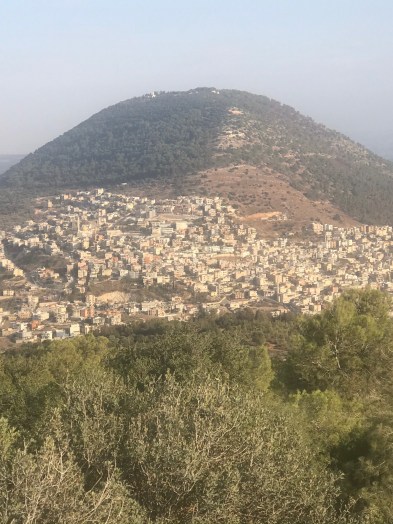
The weather was beautiful; sunny and warm(although it got very warm at times later).  We knew we could get water on Mt Tavor, at the Church of the Transfiguration, so we only carried around 3 litres each.  The trip was delightful along the side of the Tavor stream, although the large inverted pudding basin of the mountain slowly growing larger gradually loomed ever more daunting.  It was indeed a long, steep and hard climb up taking over an hour.

Tavor rises half a kilometre up from the stream with 350m vertical in little over a kilometre much of which is over loose rock.
UNADJUSTEDNONRAW_thumb_1239

  What is more, the pudding basil shape makes climbing deceiving – looking up through the trees that cover the mountain side you catch glimpses of what seems to be the top – but as you climb up the horizon recedes and there is further to go.

Eventually, however, we made it and the absolutely magnificent view  more than justified the effort.  the Transfiguration Church on the summit is also fine and simple.  (That evening we saw it floodlit from the beautiful small village Kfar Tavor, seeming to float in the air against the black hill and sky.)  Designed by Antonio Barluzzi (1884-1960), a Franciscan monk and architect known as the “Architect of the Holy Land”, it was completed surprisingly recently in 1924.  There is also a fine Greek Orthodox Monastery.

This slideshow requires JavaScript.

UNADJUSTEDNONRAW_thumb_1275

Just because you manage to find a sign, didn’t mean it helps…

We were running late, and after topping up our water we made the even more treacherous descent of Mt Tavor to Shibli – or we did eventually because from the top of Tavor and much of the rest of the trip we were bedevilled by poor signage on the trail.

At the bottom we grabbed a (very expensive) drink at the tourist trap snack bar and then walked in a large circle around Daburia (taking in a short lunch stop) before starting our second climb of the day – Mt Devora.  We originally planned to be there around 14:30 but reached the top, a steady 4 Km climb, at around 16:30.  We admired the monument presented UNADJUSTEDNONRAW_thumb_1240in honour of the Silver Wedding of Queen Elizabeth II and Prince Philip by British Jewry and hurried on down as the shadows lengthened knowing we had a third climb, of Mt Jona, to reach our destination for the day at the mall before sunset at around 17:40.
UNADJUSTEDNONRAW_thumb_126b.jpg

Things were going well until, once again, as we reach the foot of Mt Devora and looked up to see the Mall high above us, we searched in vain for trail markers.  There had been a lot of road building and repair in the area and it also seemed that the trail had been rerouted a bit.  We tried getting directions from local arab farmers harvesting their olives, and from their wives crushing them nearby.  They were friendly but not very clear about the hiking trail we were seeking.  In the end, we seemed to pick up the old trail markers rather than the new ones, started off with renewed energy, and then half way up the side of the stream we were following up Mt Yona the markers just disappeared.  In the end, in failing light we clambered for the last 30 minutes through rocky areas of thick and sharp thorns, brambles, and other assorted undergrowth up to the Mall.IMG_0023

Rafi was feeling a bit rough – he was a little dehydrated – and Ronnie and I had thorn scratches and splinters.  It was a relief to pick up the other car and make our way to our hotel just outside Kfar Tavor – The Pearl of the Valley.  Basic but fine and very friendly with a good ensuite shower.  Rafi skipped supper but after a little effort Ronnie and I found a delightful friendly restaurant קפהדרציה (Cafe Darcia) in which to eat – lively, young, music, great terrace – a perfect end to the day.

But if that was the easier day, goodness knows what tomorrow might bring…


Back on the Trail…

Seven months after we last hiked the INT, and 5 months after we had to cancel the May trio. at last on Tuesday we are scheduled to hit the trail again.  I’m really looking forward to it.

Starting from Yardenit, our aim was to go to Kfar Kish on Day 1, to Nazareth Illit on Day 2 and to Hamovil Junction on the last day,  on Day 2 climbing Mt Tabor and Mt Devorah.

In fact, it looks like we may switch Days 1 and 2, going from Kfar Kish to Nazareth Illit, before doing the long Yardenit to Kfar Kish stretch on Day 2.  This is because I have my mother’s Yahzeit on Tuesday, and so we will hit the trail a bit late, after I’ve davened Schacharit.  Logistics wise it is not really an issue as we are staying at the Pearl of the Valley Hotel at Kfar Tavor, very close to Kfar Kish.

So, it is time to pack – it will be really good to get going again.

Disappointment…

It was bound to happen sooner or later. It has proved hard enough to coordinate diaries in the light of knowns (appointments, events and holidays) and known unknowns (possible but not yet fixed appointments, events and holidays). We couldn’t account for unknown unknowns like Ronnie picking up a bacterial infection having waded through stagnant water with an open wound.

The result was a very uncomfortable bug for Ronnie and short notice postponement of our May hike.

Hence I am spending more of my time in Israel working and attending a Biomed conference than I had anticipated – it was not worth cancelling altogether as I’d  planned to attend part of the conference and do some work after we finished the hike in any event.

Fortunately the hotel in Kfar Kish we had booked for two nights has been kind enough to transfer our booking to October.  We did think of another summer hike to make up time, but early December seems a better bet.

Just a bit frustrating that we currently have perfect hiking weather!

Pesach preparations – and maps!

Pesach in Israel with my wife Ruth, son Jonathan, and his wife Lisa and children Sophie (6), Eva (4) and Emmy (16 months) (and Lisa’s mum Ros) was wonderful. But, once Jonathan and his family left, there was a chance, before we too flew back home from Israel, for me to make preparations for the next stage of our hike. This starts with what looks like the longest (and toughest?) stage yet, to Kfar Kish.

I packed ready for the trip and pored over maps. There is now an English language on line downloadable series of 53 maps (one per day) of the INT and, although they seem to lack some detail, they are downloadable free. I shall try printing and laminating them.

The best maps though still seem to be the large SPNI Series covering the shvil.  Although expensive they are comprehensive, waterproof and easily carried (I may try and pick them up in Tel Aviv when I fly back to Israel on 12 May).  Those in the Red book are also good but – not ideal for the Trail – so I photograph both them and the daily guide and refer to the images on my phone.

I also use the Wikiloc and the Israel Hiking maps available online on my phone to keep track of where we are. Rafi uses the Amud Anan app and has downloaded the maps (close to £100) to use with gps when there is no phone signal.  They seem excellent and I might invest – though there is somehow something ‘more authentic’ about hiking with a hard copy map.

The long range weather forecast looks good – hot even – and over the three days walking we have planned we will start heading west towards the Mediterranean. This means lighter clothing to pack – more than offset by the need for extra water.

There are in fact a number of ‘Sea to Sea’ (i.e. Kinneret to Mediterranean) hikes similar to the next stage of our journey, most taking three or four days, and they all look interesting.  One or other west to east might be worth a separate trip some time!

UPDATE:  I bought a laminator and this has transformed my view!  I cut the maps out of my old Red Book and although a little dated they are A5, detailed and you only need to take a single sheet for the day.  Laminated they are waterproof and robust.  Similarly, I’ve printed and laminated the A4 downloadable SPNI A4 maps.  They are ideal when combined with something more detailed – the Red Book maps or in my case the free online version of Amud Anan; I’ve not had the need to download their maps yet, and it tells you precisely where you are…


27 March 2019: Tiberius Illit to Yardenit (~15 km)

This morning, as usual, at breakfast we packed our lunch in the dining room and left Kibbutz Hakuk – although here they expected you to do that and provided lunch rolls, fillings and bags.  The accommodation may have been pretty basic – and the dining room flooded with school kids – but the staff were friendly and it met our needs. (That said, we might try a hotel room again next time…)

Today looked like being our easiest day so far – and so it proved although, particularly for the first two or three hours, we walked in rain, and the amount of thick mud that stuck to our boots was at times ridiculous. So were the lack INT trail markings….

img_0272-1Rafi and Ronnie had waterproof trousers, I didn’t, an error I’ll correct next time.  On the first day Ronnie hadn’t worn them, much to his regret when he found he had only one pair of trousers with him and had to borrow a pair of mine whilst washing his when we went to Avi’s for dinner last night. The mud was so thick on my walking trousers each day it was a huge effort to clean them up each evening for the next morning.  But enough of the housework…

We dropped a car at Yardenit, a baptismal site just where the River Jordan leaves the Kinneret and, early in the day, it was already crowded with groups from around the world preparing to be (re-)baptised.  They wore white robes and it was striking how much it 44b6c6e3-92c0-4f9c-a3b4-edbcf013b7a3meant to them to be undergoing the ceremony in what was to them such a special place.

Yardenit is not on actually on the Jesus Trail from Nazareth to Capernaum, but Christian pilgrims come to walk that too, and we did come across it for several kilometres of our walk this time, around the Arbel Cliffs and Migdal.  It is a 65-kilometre hiking trail in the Galil which connects important sites from the life of Jesus as well as other historical and religious sites.

We drove back along the Kinneret to start our trek and left the petrol station in IMG_9600Tiberius Illit and walked an easy path through the Switzerland Forest.  The Red Guide said we would walk all day with magnificent views of the Kinneret to our left – but the rain and mist obscured them pretty effectively for most of the first two hours.

We saw birds heading north for the spring (notable by its absence at that point), and several Rock Hyrax staring inquisitively at us.

The img_0264.jpegbutterflies were still around in droves – although wisely not trying to do too much flying. It was only in retrospect that I found out from Eyal Greenberg, CEO of our biotech R&D facility in Netanya, that for two weeks each yearIMG_9615 millions of Painted Lady butterflies pass through Israel on their way from Africa to Europe.  Most go to Turkey, Greece and Southern Europe, but some travel as far as the arctic circle and around 10 million to the UK (30 million make the return trip). It can be a round trip migration of up to 14,000 kilometres or 9,000 miles, and it takes six generations of butterfly to make it, travelling up to 100 miles a day!  Simply extraordinary!

We left the cycle path we had been following and started to walk along some very muddy farm tracks.  Heavy walking but still pretty flat and the flowers, the trees and increasingly, as the cloud cleared and the Kinneret and Golan appeared, the views were just magical.img_9607

As we neared the Southern tip of the lake, we started our descent with a brief stop for IMG_0280lunch before reaching sea level (that is, Sea of Galilee level, 200m below actual sea level).  After a period of good signage the trail markers again disappeared for a while, but it was clear we needed to turn right to reach Yardenit and we found ourselves walking through Kinneret,  a settlement established in 1908 alongside a training farm – Kinneret Farm – the settlement under the sponsorship of Baron Edmund de Rothschild and the farm of the Palestine Bureau of the Zionist Organisation.  The projects were of great importance in initiating the Kvutza communal settlements, such as Degania Alef, Kibbutzim, starting with Ein Harod and Moshavim, starting with Nahalal – all started by pioneers trained at Kinneret Farm.img_9639img_9630

Indeed, incredibly, Kinneret and the activity of Berl Katznelson lay at the heart of:

  • The kvutza type of communal settlement
  • Degania Alef, the first kvutza, est. 1909 by pioneers trained at Kinneret Farm
  • The kibbutz type of communal settlement
  • Ein Harod, the first kibbutz, est. 1921 by pioneers trained at Kinneret Farm
  • The moshav type of communal settlement
  • Nahalal, the first moshav, est. 1921 by pioneers trained at Kinneret Farm
  • The women’s rights movement in pre-state Israel
  • Beit Ha’almotor Havat Ha’almot agricultural training farm for women, active 1911-1917 at Kinneret Farm
  • The first assembly of women farmers (1914)
  • HaMashbir cooperative for the sale of affordable food during World War I, est. 1916
  • Tnuva cooperative for milk and dairy products, est. 1926
  • Solel Boneh construction company, est. 1921; emerged from the Work Battalion
  • Bank Hapoalim workers’ bank, est. 1921
  • kupat holim public health care system
  • Haganah paramilitary organisation: at the 2nd assembly of the Ahdut HaAvoda party held at the Farm in 1920, the agenda included the founding of the Haganah

The Farm residents also had a major role in establishing and shaping the Histadrut labor union of pre-state Israel.

So far as we could tell by comparison with a sign showing an old photograph of the settlement in 1908, all the original homes were there, plus some others filling in spaces between them, and the quiet atmosphere just a few dozen yards from two busy roads was striking. Unfortunately the small museum (in the former local hospital) and the town hall were closed, but they, the house where many settlers sheltered in the 1929 Arab Riots and other historic sites were marked with blue signs.

We then passed to the east of the village, across the road from the restored Kinneret IMG_0292Farm, the historic Kinneret Cemetry where many pioneers and leaders of the Labour movement are buried, among them Berl KatznelsonNachman SyrkinRachel Bluwstein (“Rachel” the famous Hebrew-language poet from pre-state Israel, Ber BorochovMoses HessAvraham Herzfeld and Shmuel Stoller. The first grave was dug in 1911 for Menahem Shmueli (Mamashi).

By early afternoon we had arrived at Yardenit again at the end of our three days’ of treking the Shvil and made our way back to Tiberius Illit to collect the car.  We had a farewell drink, Ronnie added his thoughts to the Shvil Log in the small supermarket and we parted company until our next trip scheduled for May. .

I decided to take the opportunity of finishing early and the improved weather to go back img_9675img_9669to Yesha fort to see the irises.  Driving back – 45 minutes of fast driving – I realised how far we had come, but I was out of luck. Despite the guidance of the lady who ran the vineyards at Yiftah to the spot she had seen them a couple of weeks earlier, they had all finished flowering.  But perhaps it was for the best; I’ll try and arrange for Ruth and I to see them together next year.  The trip was not wasted – the other flowers and the views were spectacular, and with them in mind I started the trip back to Herzliya.


26 March 2019: Kibbutz Hakuk to Tiberias Illit – Land of the Butterflies (~ 17 km)

Today dawned a perfect walking day – AB0582E7-6B1D-4CA5-90D3-E31F697C84D2the weather was in the high teens, sunny without much wind, warm in the sun and cool in the shade.  We expected a relatively straight-forward day but for a stiff climb up the Arbel cliffs, and left the car at a petrol station in Tiberias Illit before going back to pick up the INT where we had left it, a kilometre or two down the road from Kibbutz Hakuk.

We all wore our new Shvil T-shirts, and very smart I thought we looked too.

We continued to follow the Amud stream, but by now we were out of the gorge and in sight of the Kinneret; and whilst we still criss-crossed the IMG_9487stream four times as it meandered towards the lake. It flowed gently and we were walking an easy straight-ish path.img_9493

The flowers grew in profusion, and we started to notice large numbers of butterflies, and later caterpillars – a phenomenum that grew over the next two days.  There were distant views of the Arbel Cliffs (with the Horns of Hittin beyond), at times shining green and brown in the sun and at times looking grey and forbidding in the shade of the gathering clouds. Fields and orchards started to appear as we approached the bottom of the rift valley – as well as new homes being built with views to the lake.  We chatted to the builders.   The homes lay below Migdal where Rafi’s cousin and his accountant have holiday homes with great views over the Kinneret to the Golan.

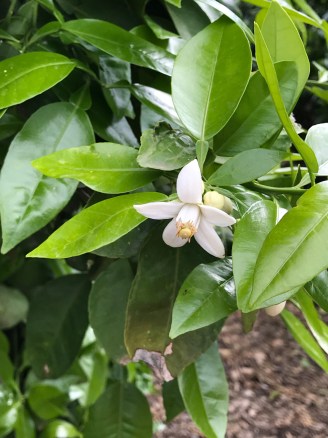
At one stage we were almost overwhelmed by the incredibly powerful jasmine-like smell IMG_9492of orange blossom (could have been Pomelo) from an orchard we walked through, and there were mangos and other fruits as we approached the entrance to the settlement of Migdal and reached the banks of the Kinneret itself – or at least Road 90 running along its shore.  It was encouraging to see the lake was larger than when I last saw it.  The past three months have seen high rainfall and the Kinneret is higher than it has been in at least five years, increasing in depth over the winter by around 3 or 4 metres with a metre or more still to come – which given its gradually sloping shoreline significantly increases the size of the lake.

I stopped at a store on Road 90 to buy some disposable razors (having forgotten to pack one), and then we started to walk south west through a mango orchard towards the Arbel Cliffs – the climb looking more daunting as we approached.  The INT here runs parallel to Road 90 towards a Bedouin village, Hamam.  Originally built for Mizrachi refugees, and pretty run down, the inhabitants of a number of Arab villages were subsequently moved there and have transformed it.

The grass and flowers were wet, chest high and the path muddy; it made for a damp walk. But at the village we turned left into the Arbel National Park where the cliffs loomed above us dotted with caves. After a break for a snack started our ascent.  We were a bit concerned about time and Rafi suggested we aim to complete the ascent in an hour and a quarter.IMG_0224

At first the path was a well maintained zig zag path up an increasingly steep hill – enough to make you breathless but straight forward.  However it was relentless and as we climbed it made sense to stop occasionally to catch our breath and to admire the view.  It was magnificent.  IMG_9510We could see Hamam spread out before us and you could see it was a village of good homes with a new school, a new mosque and other signs of apparently well-earned prosperity.  We heard the midday call to prayer ring out over the valley and could look beyond the village to see end of the Amud gorge and,  further to the right, the northern Kinneret and the Golan heights as far as Gamla and Mount Rabin beyond.  The scenery was breath-taking.

Looking back to the looming cliffs above, we saw the very steep meadow-like climb ending abruptly in sheer rocky cliffs rising up to another 110 metres vertically (the only place in Israel you can base jump), covered in flowers and looking like the largest dry stone wall and vertical rockery you could ever imagine.

Dug into the mountain itself are a number of cave dwellings, expanded from natural IMG_0230caves. There are documented Jewish cliff dwellings dating back to the Second Temple, and the fortification walls protecting some of them are from the 17th century and were built by Ali Bek, son of the Druze emir Fakhr ad-Din al-Ma’ani.

Josephus writes about how Herod the Great, with the help of Roman soldiers, defeated some of the last rebels who supported the Hasmonean king Antigonus and had taken refuge in the Arbel cliffs.  They lowered soldiers in baskets by ropes from the cliff top to kill the Jewish Zealot defenders

The caves on the steep northern side were reused in the Ottoman period by the Druze Ma’ani dynasty to create the cave castle known as Qal’at Ibn Ma’an.

IMG_9559After a quick look at the sites we started the serious business of climbing the near vertical cliff face.  Fortunately the better weather meant we did not have the mud and slippery rock issues we had in the Amud gorge the previous day, but there was a seriously long drop and the galvanised rings hammered into the cliff at particularly challenging sections, whilst essential, did not dispel the occasional bout of vertigo as we continued the climb to arrive – eventually – at the top precisely one and a quarter hours after we started.
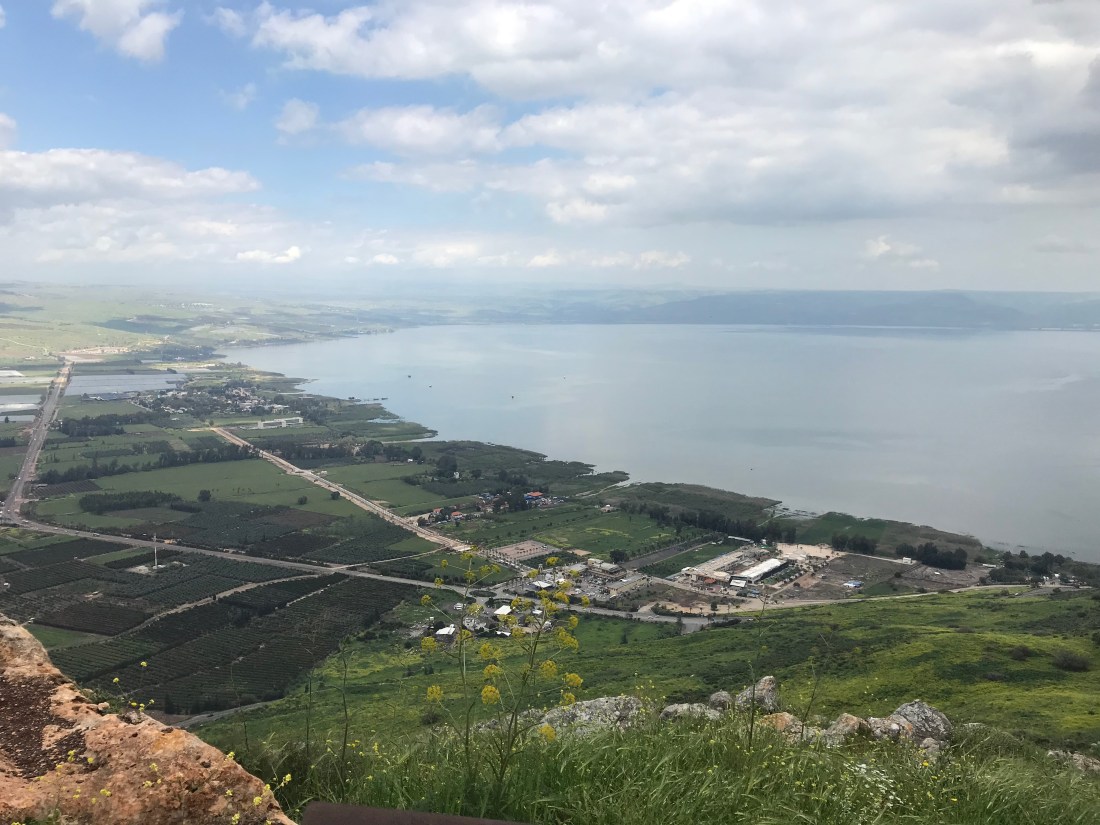
We stopped for lunch by a reservoir at the top, admiring the view, and chatting to an American and Argentine couple we later saw again at dinner, before setting off for what Rafi assured us was a quick two kilometre final leg to the car.  Some two Kilometres!  The trail to IMG_9569Tiberias Illit took the best part of two hours!  But it was not difficult walking and we continued to marvel at the number of caterpillars and – elusive to photograph – butterflies we saw.  There were clouds of butterflies – rising from the path at every step, and it was hard to avoid treading on the multitude of caterpillars.  I probably drove RafiIMG_0250

and Ronnie a bit crazy as I kept stopping to admire them.

Eventually, we arrived at the car at around 3:30pm and had a congratulatory beer.  The Red Guide said that the mini market at the petrol station kept a logbook in which ‘shvilists’ could make an entry.  I asked for the logbook and was handed 4 or 5 random exercise books, neatly bound and numbered.  The latest volume was 29.  Most entries were in hebrew,  but some were in English, remarking on the journey, practical issues and life in general.  I made an entry for the three of us and we made our way back to Kibbutz Hakuk.

That evening we were all still tired and chose an early dinner at Avi’s in the centre of downtown Tiberius.  The town looked to be a bit smarter than last time I was visited – there is a new and dynamic mayor who is making an impact – and there are certainly enough Christian tourists touring the Galil to improve the economy, as well as a significant growth in the Charedi population.

The food at Avi’s was excellent.  I had a huge Israeli salad selection as a starter – enough for the three of us (especially as Rafi and Ronnie had soup as well) – and then we had two entrecotes and a fillet steak between us – the fillet was huge!  Avi is a giant of a man and has owned and run the restaurant for 43 years; he was a perfect host.  Definitely worth a repeat visit…

25 March 2019: Meron to Kibbutz Hakuk – Nahal Amud (~ 18 km)

It felt a very early 4:20 am start as I had only arrived in Israel and packed for the Shvil the night before.  It was also an unpleasant surprise to wake to rain which, based on the forecast on my phone, I had not anticipated.

I’m still refining the list of what to take when I hike (and I also need to find a way of actually remembering to take everything that is on the list).  I’ve also concluded I need a complete set of kit in Israel as trying to remember which bits are in Israel and which in London, and what to take from one country to the other each time, is plainly beyond me.  In any event I did not have a full set of wet weather gear – something I need to correct based on the experience of the next three days…D33E02E9-A606-44F6-AA25-AE0C1D1511D5

On arrival at Ronnie’s I handed out the Shvil printed T-shirts I had ordered and which we decided to wear the following day.  Then we were off on our two-car trick, dropping my Eldan Hire Car – a Citroen C3 – near Kibbutz Hakuk at the end of the Nahal Amud Park and driving on in Rafi’s Forester to Meron, where we had finished our hike a few weeks earlier.  We stopped only for breakfast and to buy a sandwich lunch at Roladin in Rosh Pinna.  The staff were as ever delightful, and the place had become a favourite.

UNADJUSTEDNONRAW_thumb_ff7By 9.10 am we were on the trail and the rain, though not heavy, came in occasional showers.  Of course, at this point I found I did not have my walking pole.  I was sure I had brought it, but could not find it in the C3 when we left it.  A pity as Nahal Amud was a day that poles would prove their worth…  Luckily Ronnie – who had previously looked askance at poles – had become a convert and bought two top of the line poles; I would end up borrowing one.

The first couple of kilometres or so were unadjustednonraw_thumb_fb7.jpgeasy walking.  A gentle downward path beside the Meron and later Amud streams.  But, it gave us a false sense of security and optimism the day would be easy; in fact it was to be far from it.  Also, whilst walking we picked up the first alert that a rocket from Gaza had hit a home north of Tel Aviv injuring 7, and shortly afterwards heard that thousands of reservists had been mobilised.  Sobering.

On the trail that whole day we met only one person, early on, a woman teacher who was walking part of the Upper Nahal Amud to check out that it was a suitable hike for her class. It was up to the Sekhvi pools (though the climb out of the gorge there and a little further on near Ein Koves  and Safed – the only places until Road 85 it is possible to get out – is 500m of pretty steep scrambling), but after that things got trickier.

The Nahal Amud gorge is in places narrow and rocky with steep sides.  It is split between the Upper Nahal Amud (after we had walked 12km or so) and the Lower Nahal Amud by Road 85 (crossed through a tunnel/large pipe under the dual carriageway).  We found ourselves constantly crossing back and forth over the stream, stepping from rock to rock to avoid having to hike in cold, wet footwear.  We must have crossed back and forth perhaps 50 times in all – and even assuming each careful crossing (using poles to balance) took the three of us just a couple of minutes or so each time, that still meant two hours or more of lateral movement over the day, significantly slowing our progress.

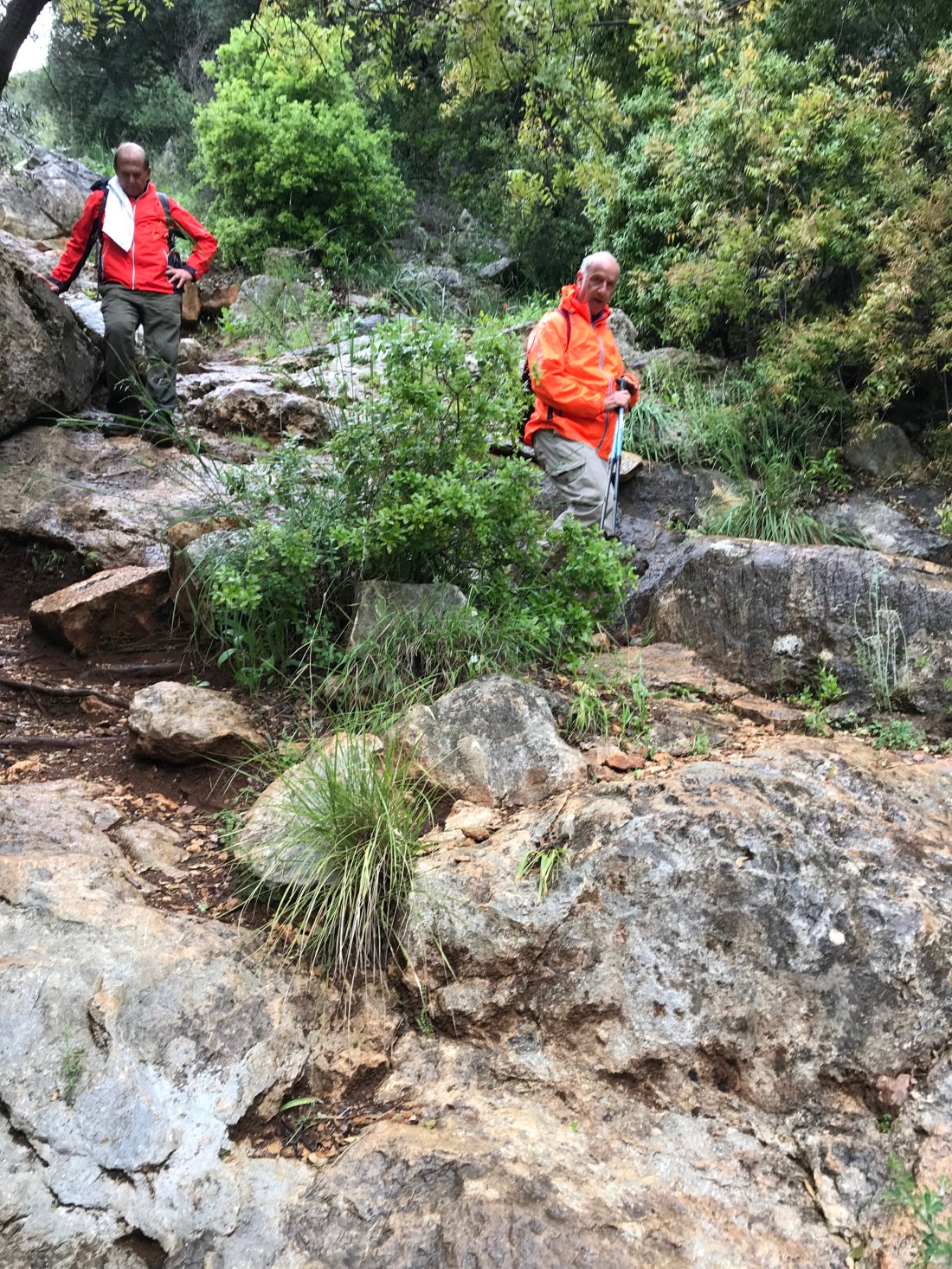
That was not the only problem.  At times we had to climb up from the bottom of the gorge to get around particularly sheer rocky banks, and the climbs were challenging as in the rain our boots became increasingly muddy and lacking in grip and the rocks above the gorge increasingly slippery. In places steel handholds had been embedded in rocks to help get around protruding boulders or particularly steep rock faces, but sometimes I’d guess we were up to 15 or 20 metres above the water and a fall would have been potentially catastrophic.  This was probably the first really difficult part of the hike – definitely made much more challenging by the weather and the occasional confusing trail marker….UNADJUSTEDNONRAW_thumb_105dStill, there was little chance of getting lost as the gorge went on, and on, and on – although once or twice we lost the INT markers marking the easiest route over difficult parts of the gorge.  On one occasion I scrambled up a particularly challenging part of the gorge, getting very wet and bruised in the process, to find it was not the way forward.
B08879D3-D728-4FCB-94BB-5FA17524431B

There is a lot to see. The gorge is full of caves, and near the Nahal Amud pillar itself, towards the end of the Lower Nahal Amud, archaeologists have found evidence of Homo Heidelgergensis and Neanderthal man using stone and flint tools.  Later, in the Upper Nahal Amud, man harnessed the power of the water to build a series of watermills (originally 26 in all) for making wool and flour, with an aqueduct system to power them; F6482885-408C-4655-977E-7AD5746FD0DBthe remains are clearly visible.   There is an interesting background.  After the expulsion from Spain, in 1492, Jews brought a new technology to Safed, which helped them to produce good quality woollen cloth. This production process involved beating the wool forcefully (fulling). The Jews of Safed built fulling mills operated by the water power of the Amud stream, which they called ‘batan’ (from the Arabic word for ‘to beat’). The golden age of the Safed fulling mills lasted only three or four generations, after which the mills were converted to regular flour mills in use until the 20thCentury.

At one point it is possible to climb steeply 450 m to the top of Mitzpe Hayamim mountain, one of the few places in the country where from the same spot you can see both the Kinneret and the Mediterranean– a treat we didn’t know about until later, but would have missed anyway in the then poor visibility.

There are also two huge stone stairways, one each side of the gorge forming part of theUNADJUSTEDNONRAW_thumb_1047 Israel National Water Carrier.  This is the siphon through which the National Carrier crosses the Amud Stream, passing over a 150 m deep channel. In this section, the water is carried through steel pipes. After going down the northern bank of the stream, it then goes up again onto the other bank without the need for any input of energy (the law of communicating vessels). The pipe is some 700 m long, and has a diameter of 3.10 m, and is laid in a channel carved in the cliff, 5 m deep and 10 m wide. The pipe is covered with concrete in the form of stairs.

I was also struck by the profusion of spring flowers everywhere – an extraordinary range and array of colour that followed us throughout our three day walk.  Although too late for the height of the iris season, we saw poppies, cyclamen, orchids and much more.

We also heard loud dog-like animal calls apparently signalling in the valley.  We guessed jackals or foxes (could have been wolves or wild boar, but sounded more dog like); I suspect jackals – the sound was deeper than a fox bark.UNADJUSTEDNONRAW_thumb_fb6

The Amud gorge was also once famous for raptors/birds of prey.   The Israel Nature and Parks Authority states: “In 1864 the priest and naturalist Henry Baker Tristram described the nests of hundreds of vultures, several bearded vultures, 1E37552F-5341-4963-B9BE-7F865ACD4852
lanner falcons and rock doves on the cliffs of the Amud Stream. In the past, Bonelli’s eagles also nested in thecliffs. Even today, although many of the raptors around the country have been harmed, the cliffs offer an important nesting site. In December 2010, up to 50 vultures were observed spending the nights on the Amud Stream cliffs, as well as other passing birds of prey such as the cinereous vulture and the golden eagle. That year, nine vultures’ nests were built there. Other species of F1A865F9-80CE-4E1A-98EF-883563A2AE47birds of prey nesting or staying around the Amud Stream cliffs are the long-legged buzzard, the lesser kestrel, the common kestrel, Bonelli’s eagle, the Egyptian vulture, the cinereous vulture, and the snake eagle.”

In the end, we found ourselves running pretty late, and it was eight and a half hours before we finally passed the Amud itself, a limestone pillar 20 m high, and shortly after, some 18km from Meron, reached Road 8077 where we had left the C3 – with my walking pole comfortably nestling inside the boot.  Aaargh!  It was dark and we were pretty tired before we finally arrived at our accommodation for the next two nights, Kibbutz Hukuk.

The accommodation was simple but adequate – the shower was hot and the supper we dashed straight into unwashed – to avoid hoards of schoolkids about to arrive, wholesome.  We didn’t much care.  We all crashed out easily that night.


Spring in the Galil

Well, I’m currently on flight EZY2038 from Luton to Tel Aviv for the next stage of our hike.  Curiously, at the airport I bumped into Laurence Gold (he was off to Innsbruck to ski in St Anton) – you’ll remember it was Laurence who set me off on this adventure in the first place and suggested this blog.  Currently he, Josyanne, Michael and Lucy are 38 days or so along the INT, and on the their last three days walked from Sde Bokker through the wilderness of Zin and across the Ramon Crater.  He described the trip as the most spectacular three days so far – so something to look forward to. Interestingly, they have given up on using Kiki and her company – they thought she was lovely but preferred guest houses and a full diet to camping and Vegan food…

This trip comes after a hectic time – last week Ruth and I visited her Aunt Sybil and stayed overnight at Lime Wood in the New Forest, the previous week I was skiing in Cortina, the week before I went skiing for the weekend with Jonathan – the combination has caused my ankle and achilles to feel inflamed and sore.  I hope it will last over the next three days.

I have decided we need a symbol for the trip and have had T-shirts printed with a photo of the INT tricolour route marker on one side and ‘Hiking the Shvil’ on the other.  Unfortunately ordering online I managed to get Rafi’s shirt printed back to front…. but it will be fine.

IMG_9334

Plans for tomorrow follow what is now the normal pattern. I’ll pack tonight and tomorrow we meet at Ronnie’s at 05:45 to drive up to Kibbutz Hakuk, where we are staying for the two nights of the trip (Ruth Rimon in Safed cancelled our booking because of overruns in renovating their kitchens).  We will leave a car there, and then go to Meron to start the walk along Nahal Amud to our overnight stop.  The spring weather is forecast to be pleasant, and I’m looking forward to seeing the spring flowers, but with the risk of showers and possibly hail. I’ve brought a hat, but perhaps my ski helmet might be better…