
We set off in perfect walking weather from Alma Bridge, where we had stopped the previous day. Our aim was a long hike 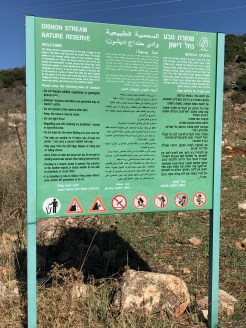 up towards the source of the Dishon stream, starting in bright sunshine.
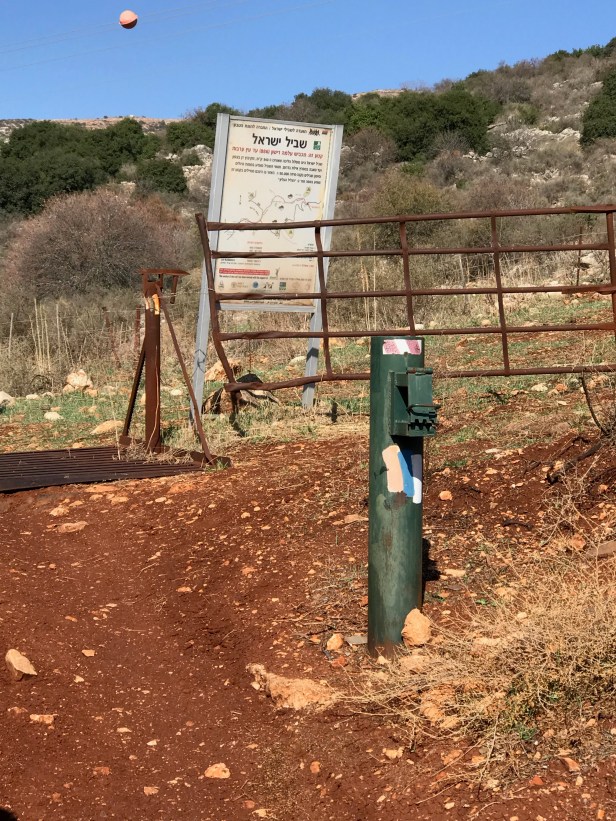
We followed 4×4 tracks for a good part of the day which made for relaxing walking, even though it was steady uphill trek, flatish in parts and steeper later – particularly in the upper reaches of the stream (involving some rock scrambling), and averaging about a 3% incline over the day.
Early on we passed the ruins of an old Ottoman mill  nestling in the valley, which for sometime was probably 100 metres or more across. The scenery was delightful, and as on the first day the trail during the morning was devoid of
  people.
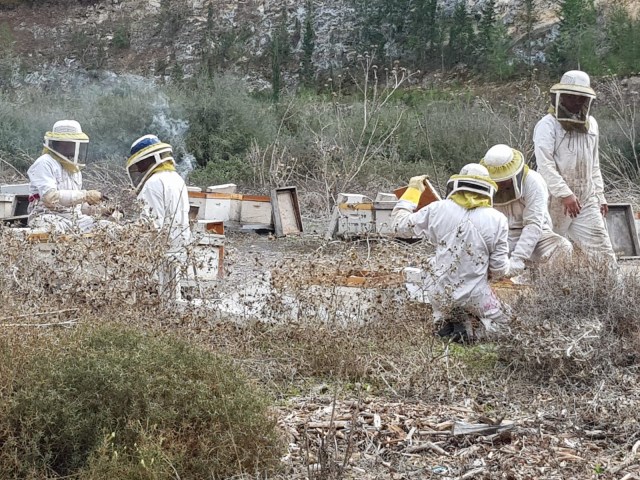
Once we crossed the 889 the trail was more wooded and it and the road followed the stream. There was more human activity – we saw Thai beekeepers smoking beehives and collecting the honey, and the weather became a little more cloudy – but remained dry.
 Entering the Ya’ar Baram Nature Reserve we came across groups of other walkers for
 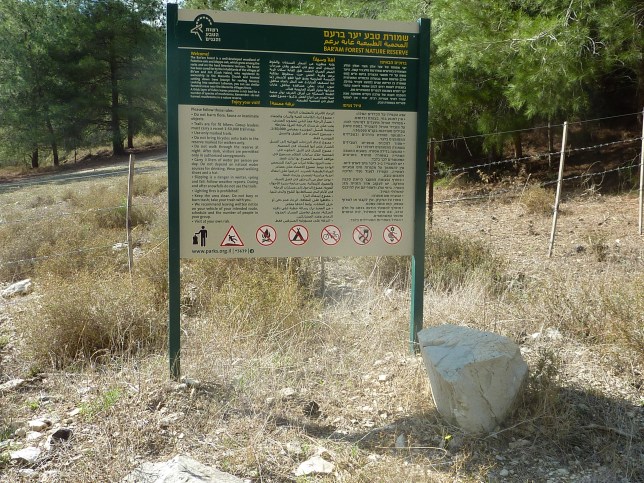 just about the first time since we started the Shvil – day trippers walking down the Dishon from Mt Meron. We found a nice spot for a relaxing lunch and set off against the
  tide of occasional walkers who filtered through until we crossed the 89 and found ourselves alone again. By now we were at over 750m but given the the trees and the valley we were in we did not see much in the way of views.
The last bit of the climb to the 89 was very different from what had gone before. It was steep, rocky, damp and heavily wooded. Indeed, the climb was almost oppressive.
We did though come across our first sign for ‘Trail Angels’. Trail angels are good people along INT who open their hearts and their homes for hikers free of charge. You get to stay at private homes, rooms in Kibbutzim, or sleep on
the back or front lawn in your sleeping bag. In most places you can take a shower use the rest rooms, sometimes use the internet and occasionally cook your dinner inside the house. In some places you can have breakfast for a low fee. A remarkable institution we may take advantage of as we move to more remote area.
We arrived at the field school uneventfully in pretty good time (around 6 hours all in). 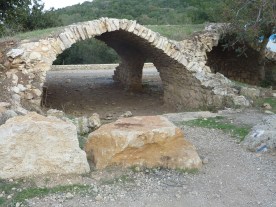 We were looking for the car park unsure whether to go right or left along the side road (it could only be 200m one way or the other)when a youngish lady in a car stopped and said (in Hebrew) – ‘you look old I’d better offer you a lift’. This did not go down well with Ronnie in particular… indeed it took him quite a while to get over it.
Once back at the hotel I took the chance, before it was dark and the shops closed, to catch up with Tomer Camus at the Camus Gallery – an art gallery in the old Jewish quarter of Safed – along with his artist wife, Ketty. We go back 17 years to when Jonathan was on year course, helping to teach and support Ethiopian immigrant children during the Second Intifada. Jonathan struck up a relationship with Tomer when he bought two paintings with a legacy from my dad at a time when Tomer was struggling with his new gallery. Tomer’s family has been in Safed for 18 generations, moving there in 1492 after they were expelled from Cordoba, Spain and coming over to Israel by ship with Yosef Caro, later the author of the Shulchan Aruch and then a child. We had coffee and a chat (he gave me a jigsaw puzzle on one of Ketty’s paintings for Jonathan’s children) and I promised to give him more notice of a visit next time.
Dinner that evening was in our hotel dining room, which was originally part of a Khan or small inn on the road from Acre to Damascus. The dining room still had the stone rings to which animals were tied and the stone food and water troughs for camels and donkeys. The views from there south east over the valley were beautiful.
 Hiking the Israel National Trail