
The weather forecast did not bode well for later in the day – and we did not want to run into the problems we had the previous day. It was also the last of our three days hiking and we wanted to be back at a reasonable time – I planned to visit 4C Biomed in Netanya. So Rafi proposed a particularly short day ending at Route 70. That seemed rather unambitious and after some negotiation we agreed to leave the car a little further on at Zikhron – but on the basis we would walk on and take a taxi back if we made good time.
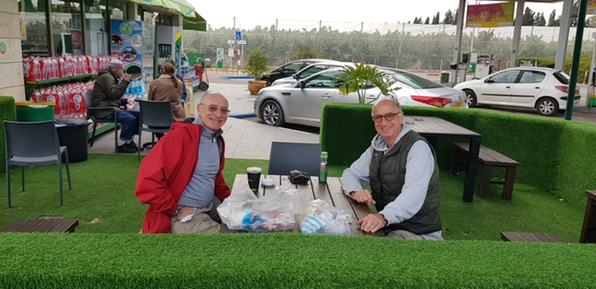
So we left early, had a quick breakfast at the petrol station we had reached the previous evening and started our walk at around 08:30 from the National Park site on Route 7021 near Kerem Maharal (and the Amphorae Winery) – having checked they didn’t lock the gates at night and we could safely leave a car in the car park there.
We passed early on a memorial for a fallen young soldier and ,after a short rock scramble, the trail though very muddy gave way to relatively easy hiking. At times we had to make detours through thick undergrowth to avoid small lakes of water straddling the path (at one point after an hour or so of relatively constant detours this began to get rather wearing) but the weather slowly improved and we made excellent time. By 11:00 we were approaching Route 70, and just above it I spotted a large fox enjoying the sunshine. There were impressive infrastructure works around there too, with new roads and terraces for a housing development in Furedeis. We passed a number of stone quarries nearby.
 We pressed on across the 70 and climbed steadily up a good trail towards Zikhron Yaakov. After maybe 3 or 4 km the trail levelled out and it was easy walking with sunny spells, so we decided to continue past Zikhron (the trail passed a little to the east of the town with the houses on a ridge above us).
By 2pm we had reached the Tishbi Winery and decided to stop for lunch there. It would have been easy to press on and finish the rest of the recommended stage – but, hey, this was a rare opportunity for a great kosher lunch with wine 200m off the INT!
The food and wine was excellent and although they messed up on my order – giving my Pizza to someone else – they more than made up for the error by giving us the entire meal on the house! That Rafi knew someone there may have helped…

As we finished the rain started to fall very heavily. Any thoughts of continuing (if there there were any) died and we took a taxi back to the car. It had been a really nice day, but perhaps the least interesting part of the trail so far. Of course that does not include Zikhron Ya’akov itself, a fascinating place.
Zikhron Ya’akov was founded in December 1882 when 100 Jewish pioneers from Romania, members of the Hibbat Zion movement, purchased land in Zammarin. The families came from Moineşti in Moldavia and a central merit in organising the move belongs to Moses Gaster, scholar and early Zionist. The difficulty of working the rocky soil and an outbreak of malaria led many of the settlers to leave before the year was up.[3]
In 1883, Baron Edmond James de Rothschild became the patron of the settlement and drew up plans for its residential layout and agricultural economy. Zikhron was one of the first Jewish agricultural colonies to come under the wing of the Baron (along with Rishon LeZion and Rosh Pinna), who renamed it in memory of his father, James (Ya’akov) Mayer de Rothschild.
To accomplish his first objective, Baron de Rothschild brought in planners who designed and allotted housing lots along the main road for the use of settlement farmers. Each lot included a house facing the street, a long interior courtyard and a rear building for storing agricultural implements. The French-inspired architecture included tiled roofs and painted wooden windows. Each farmer was given a salary and placed under the direction of Elijah Shaid, the Baron’s clerk. The Baron also commissioned the construction of the Ohel Ya’akov Synagogue, named after his father, to serve the town. Sparing no expense to build the edifice, the synagogue features a majestic ark made of white marble. The synagogue opened in 1886 and has conducted daily prayer services continuously to this day.
Following a number of economic failures, in 1885 Rothschild helped to establish the first winery in Israel, Carmel Winery, together with a bottling factory, in Zikhron Ya’akov. This was more successful economically although it was initially short-lived as in 1892 the grapevines succumbed to phylloxera, a type of parasite. After a brief set-back, American seedlings which were resistant to phylloxera were grown and the winery began to flourish. Today, the winery remains in action, as do the huge wine cellars that were carved into the mountain over a century ago.
In 1894, Jewish and Arab workers earned a wage of six piastres working in the plantations, but Jewish workers also received a supplement of four piastres from a charity fund. When Rothschild withdrew his financial support from plantations in Palestine in 1900, the subsidy was discontinued. Jewish workers were quickly replaced by Arab ones, used to being paid the lower wage.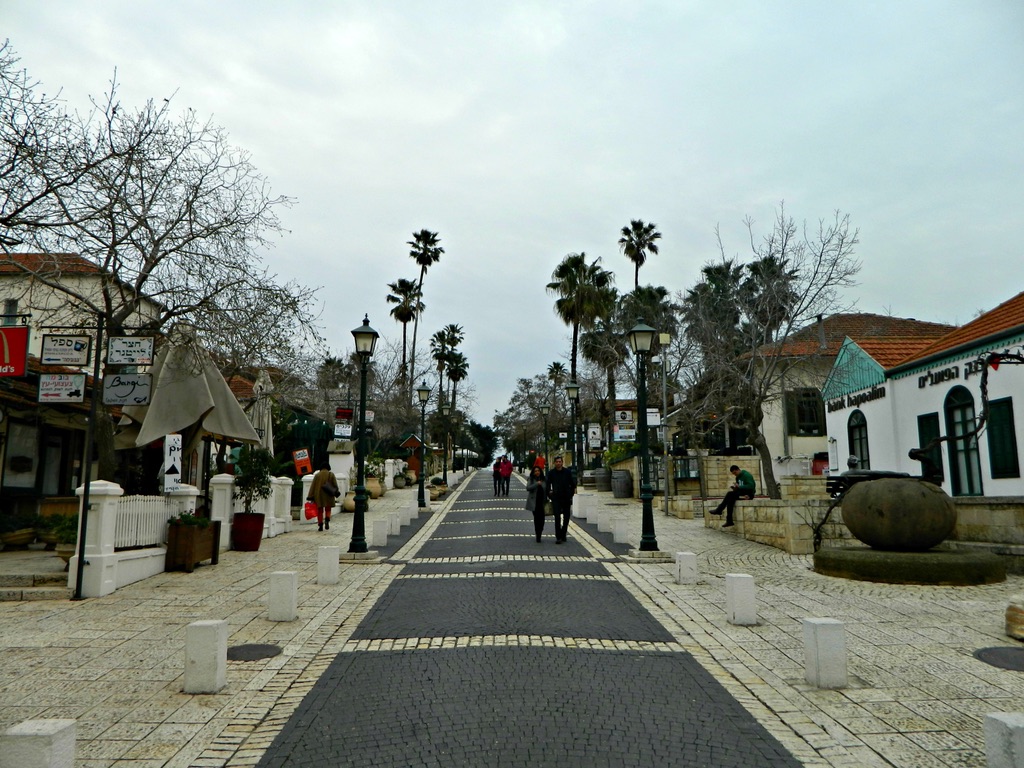
In 1954, the remains of Baron Edmond de Rothschild were reinterred in Zikhron Ya’akov.
Zikhron Ya’akov came to fame during World War I for the establishment of the Nili spy ring by Sarah Aaronsohn, together with her brothers, Aaron (a noted botanist) and Alex, and their friend Avshalom Feinberg. The group volunteered to spy on Ottoman positions and report them to British agents offshore. In September 1917, the Ottomans caught one of Sarah’s carrier pigeons and cracked the Nili code. In October, they surrounded Zikhron Ya’akov and arrested Sarah and several others. After four days of torture, they planned on transporting Sara elsewhere, she requested to be taken home to change her clothes and shot herself with a pistol hidden in her bathroom and died after several days. Sara shot herself in the throat, leaving her unable to speak, in order to avoid releasing classified information. The Aaronsohn House–Nili Museum recreates the history of this period.
In the 1922 census of Palestine conducted by the British Mandate authorities, Zikhron-Ya’akov had a population of 1,302 inhabitants; 1,013 Jews, 7 Christians and 282 Muslims.
The population increased dramatically in the early 1950s, after the establishment of the State of Israel. Between the 1960s and 1990s, the population remained constant with about 5,000 inhabitants. Since then it has grown rapidly to over 23,000.
The original Carmel-Mizrahi Winery continues to make wine in Zikhron Yaakov. The town draws many tourists attracted to its picturesque setting and historic city centre whose restored main street of landmark buildings, called Derekh HaYayin (“Path of the Wine”), houses coffeehouses and boutique shops selling locally-made crafts, jewellery, and antiques, especially on the town’s famous “Midrachov” (Rechov haMeyasdim — Founders Street).
 Hiking the Israel National Trail